
Yeda 90' Ltd
Transforming institutions through strategic insight & leadership development
Welcome to Yeda 90'
We are a strategic consulting and leadership development firm dedicated to transforming institutions and leaders through innovation, governance excellence, and sustainable growth. Our proprietary C³ Framework™ connects situational understanding, knowledge transfer, and action implementation to achieve measurable transformation.
Our Mission & Vision
Our Mission
To empower institutions to achieve sustainable, measurable transformation through strategic insight, customized leadership development, and evidence-based solutions.
Our Vision
To be a leading catalyst for ethical and outstanding shared value creation and comprehensive strategic transformation in Africa and beyond.
Our Services
Executive Training
World-class, certified courses for leaders covering strategy, innovation, governance, and digital transformation.
Strategic Consulting
Advisory and implementation support through strategy design, organizational transformation, and digital leadership.
Leadership Development
Customized programs to build high-performing leaders and teams through experiential learning and coaching.
C3Framework™
Our proprietary framework connecting situational understanding, knowledge management, and change implementation to achieve measurable transformation.
C³ Framework™
Context
Strategic understanding and environmental scanning to establish the situational baseline and align interventions with institutional realities.
Content
Knowledge architecture and capability development through tailored curriculum design, best-practice frameworks, and expert-led workshops.
Course-of-Action
Implementation, integration and impact through action planning, mentorship, and monitoring to embed solutions in systems, culture, and performance.
Client Testimonials
"Working with Yeda 90' was a game-changer. Their strategic insights and practical approach helped us transform our operations and achieve results we didn't think possible."
Jane Mwangi
CEO, Tech Innovation Hub
"The C3 Framework™ training transformed how our leadership team thinks about strategy and implementation. Highly recommend!"
Peter Omondi
Director, Regional NGO
"Exceptional consulting services. They understood our challenges and delivered solutions that made a real difference."
Sarah Kimani
COO, Manufacturing Corp
Community Articles
Dr alex KUBI
2 days ago
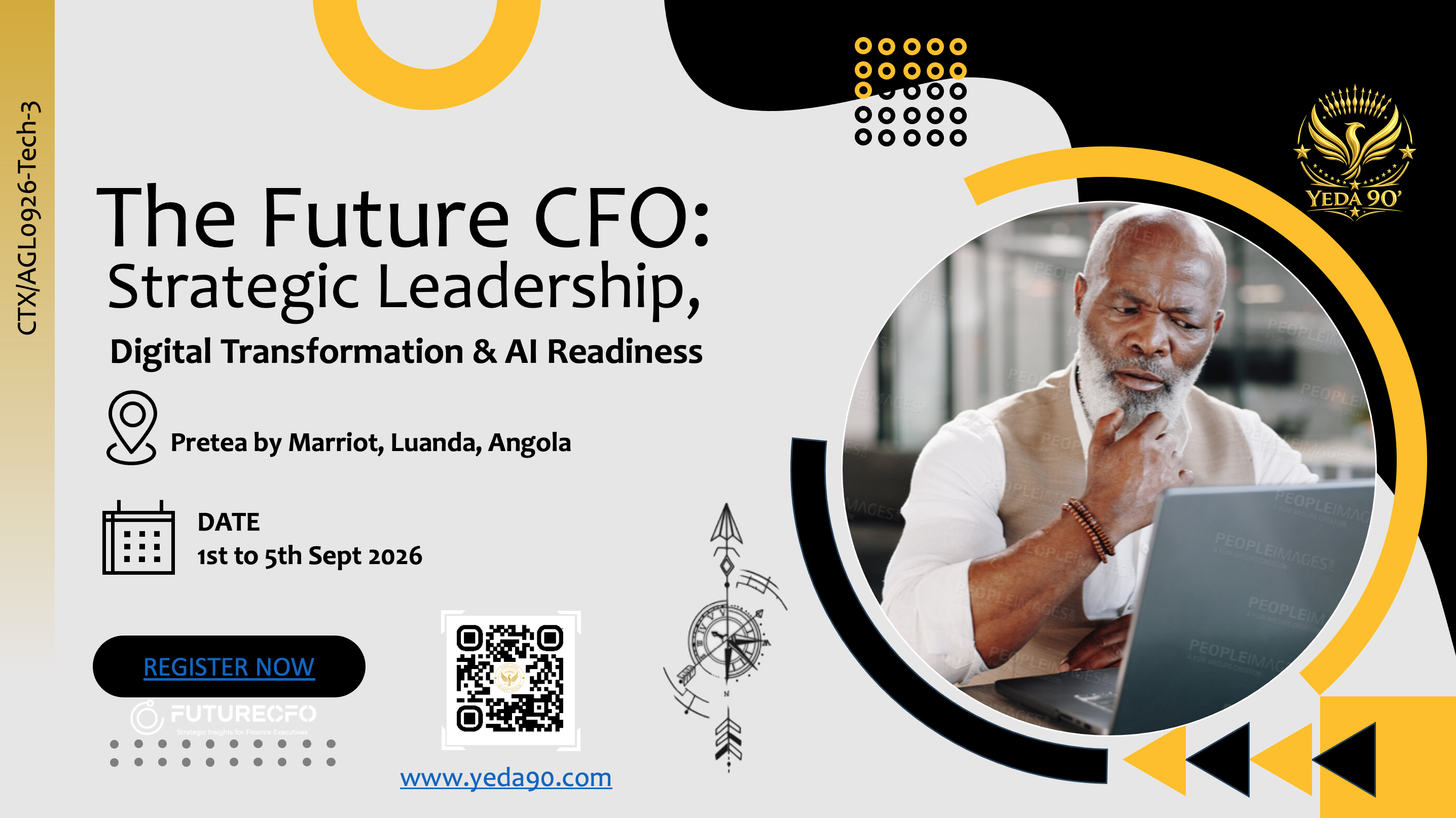
Master AI-driven strategy, lead digital transforma...
Dr alex KUBI
5 days ago
Artificial Intelligence (AI): Carl Higbie drops an...
Dr alex KUBI
May 20
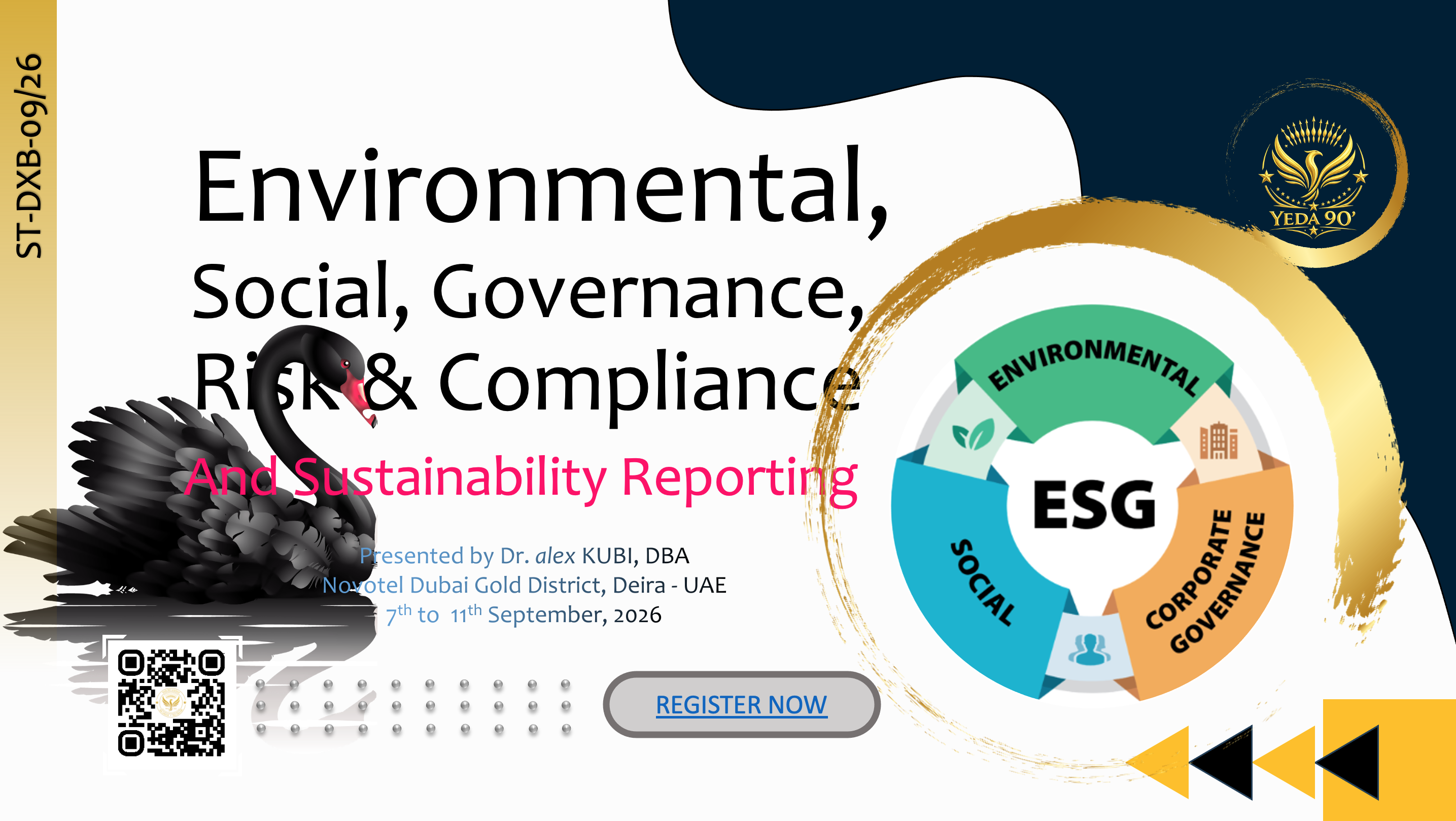
Lead the shift - from compliance to Strategic Sust...
Dr alex KUBI
May 20
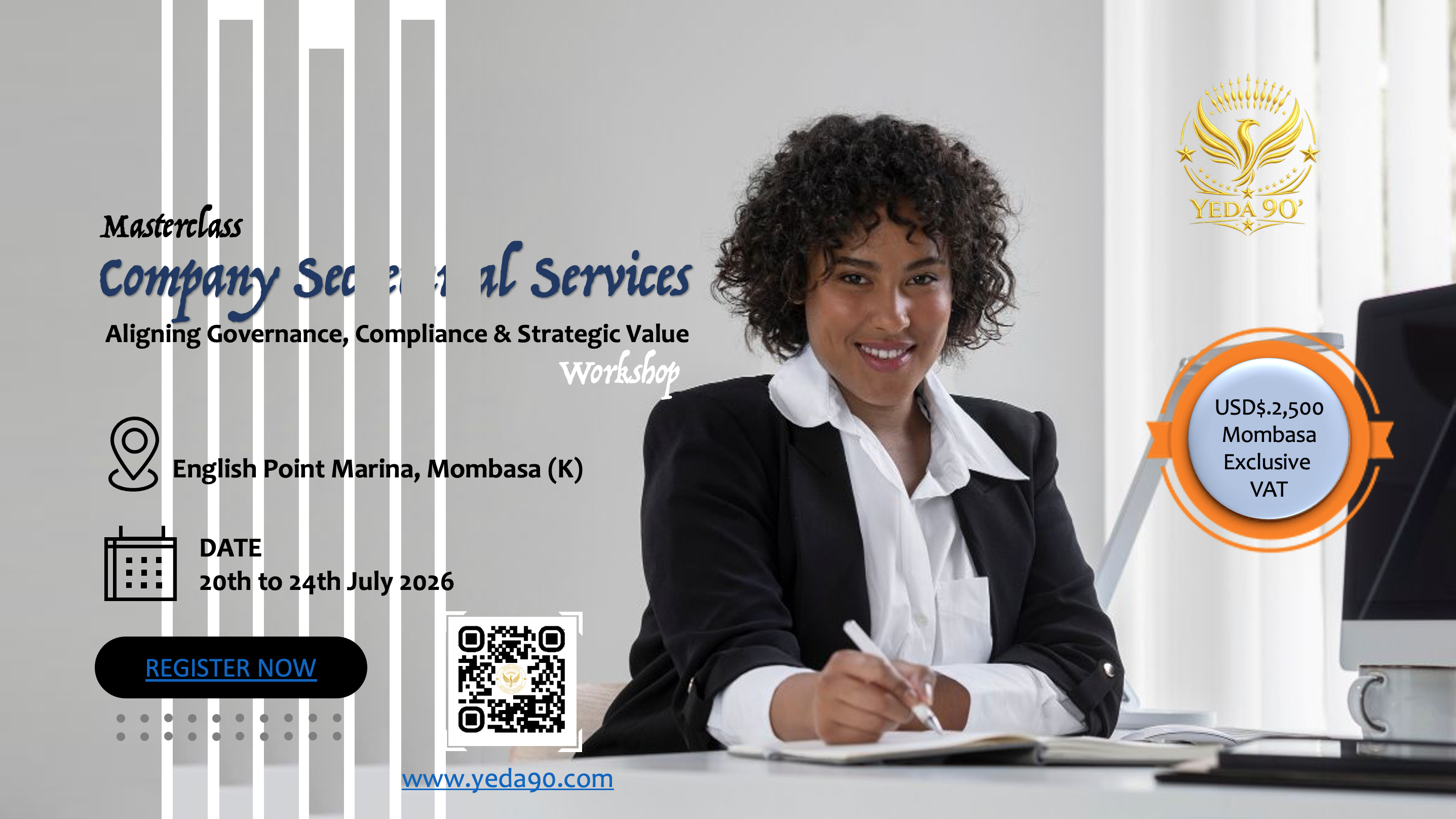
Master the three core services...
Ready to strengthen your governance backbone? Let’s talk.
Dr alex KUBI
Apr 6
Government of the Future:
A Blueprint for African Public Sector Innovation Delivering high-performance public services in a rapidly changing continent African governments face a defining challenge: deliver next-generation public services while driving growth and cost-effectiveness. With rising citizen expectations, fiscal constraints, and digital opportunities, the question is no longer whether to innovate - but how. A proven framework - the Government of the Future program - offers a practical path. Originally developed as a pan-European initiative, its tools and principles are highly relevant to African agencies seeking sustainable, modern, and quality public services. Practical solutions for real challenges At its core is the Government of the Future Centre, a research hub focused on actionable outcomes. It provides: • Annual summits bringing together senior officials to share case studies and launch original research. • State transformation case studies offering in-depth insights into public sector reform. • Thematic workshops on operational cost reduction, employment, policing, welfare, healthcare, and sustainable finance. For African ministries, these forums enable peer learning and adaptation of proven models to local contexts. Data-driven improvement One major barrier to innovation is the lack of comparative data. The program addresses this through meaningful benchmarks that allow agencies to measure performance against peers. Groundbreaking research on innovation - at both organisational and policy levels - provides vital clues for navigating challenging conditions. Centres of Excellence Specialised hubs focused on fraud analytics, employment and skills, border management, and mobility have demonstrated success. African governments could establish or plug into similar centres to accelerate gains in tax compliance, public financial management, or health supply chains. Why African agencies should engage Senior executives should consider how they could: • Gain access to leading practices and international benchmarks. • Network with peers across Africa to share lessons learned. • Help shape continental transformation agendas such as the African Union’s Agenda 2063. • Participate in regular dialogue and collaborate with like-minded states. Delivering high performance Rapid urbanisation, a youthful population, and digital leapfrogging present once-in-a-generation opportunities. By embracing structured innovation, benchmarking, and peer learning, African public sector leaders can transform their organisations into catalysts for change. Getting started Agencies can convene cross-departmental working groups, partner with regional bodies like the African Development Bank, engage academic institutions for research, and host workshops focused on Africa-specific issues such as mobile service delivery or informal economy integration. The 21st century is a time of unprecedented challenge - and huge opportunity. By joining a community of frontline practitioners and thought leaders, African governments can reshape policy and transform how they serve citizens. Article by Yeda 90’ Ltd
Dr alex KUBI
Mar 23
Mastering Company Secretarial Services
Behind every well governed organisation lies a company secretarial function that does far more than file documents and take minutes. It is the quiet engine that keeps decision making bodies on track, ensures compliance, and provides the reliable information that leaders depend on. But what does it truly mean to master this function? A Mandate Beyond Administration The purpose of company secretarial services is often misunderstood. At its core, the function exists to create and maintain a governance structure that enables the entity to achieve its business objectives. This means ensuring compliance with company, securities, and trust legal requirements - but it also means advising management on governance and law, delivering accurate and timely information, and guaranteeing that main decision making bodies meet and function according to legal standards. Mastering this role requires seeing it not as a support function, but as a strategic safeguard. Three Pillars of Excellence Effective company secretarial work rests on three interconnected service areas. Compliance services address the fiduciary duty to meet all legal obligations - no room for error, no shortcuts. Advisory and assurance services provide proactive and reactive guidance, ensuring that governance standards remain consistent and robust. Company secretarial and related administrative services maintain the integrity of original source information about companies, their officers, and shareholdings. When these three pillars work in harmony, the organisation operates with clarity and confidence. The 3 S Lens: Safeguarding, Servicing, Shaping One way to evaluate the impact of these services is through the 3 S framework. Some activities are primarily about safeguarding - protecting the firm from threats to its survival, often through fiduciary or pure compliance work. Others fall under servicing, where customers could theoretically obtain the service elsewhere, but economies of skill and scale make central delivery more effective. The most mature functions also explore shaping - identifying opportunities to create or protect value exponentially. Mastery lies in balancing all three. A function that only safeguards becomes a cost centre. One that only services lacks strategic weight. The best teams understand where each offering sits and can articulate that value to the business. Consistency Across the Group A hallmark of a mature company secretarial function is consistency. When services are applied uniformly across the organisation - whether for a large operating entity or a small subsidiary - governance standards remain intact. This consistency is not accidental; it results from clear mandates, well defined customer bases, and a shared understanding that these services are essential, not optional. Why It Matters In an era of heightened regulatory scrutiny and complex corporate structures, mastering company secretarial services is no longer a nice to have. It is a competitive advantage. It reduces risk, strengthens board effectiveness, and builds the trust of stakeholders who rely on accurate information and sound governance. When the function is truly mastered, it becomes invisible - not because it is absent, but because everything simply works as it should. Article by Yeda 90' Ltd
Dr alex KUBI
Mar 23
Move beyond compliance. Master the three core serv...
Ready to strengthen your governance backbone? Let’s talk.

Dr alex KUBI
Mar 23
Achieving High Performance in Product Portfolio Ma...
In today’s fast moving markets, shrinking product life cycles and narrowing profit windows have made product portfolio management a strategic imperative. Yet, as a recent global survey by Yeda 90’ Ltd reveals, many companies struggle to turn good intentions into results. While executives consistently rank portfolio management as highly important, significant gaps exist between perception and performance across key areas. The Performance Gap More than 65 percent of surveyed executives intend to improve their product portfolio management over the next two years. The reason is clear: half of all respondents reported product life cycles of six years or less, with 27 percent seeing cycles of just one to three years. This compressed timeline leaves little room for error. Despite acknowledging the importance of core components - market insight, technology insight, product strategy, portfolio optimization, strategic partnerships, and talent management - companies fall short in execution. For example, while 82 percent of executives rated market and technology insight as very important, only 69 percent believed their organizations performed well in this area. The gap was even wider for portfolio optimization: 76 percent deemed it important, yet just 43 percent rated their own performance highly. Market Insight vs. Technology Insight Executives recognize that both market and technology insight are essential inputs to product strategy. In theory, market insight is viewed as slightly more critical. In practice, however, companies rely more heavily on technology insight. This imbalance suggests that many organizations are not fully capturing customer requirements to guide portfolio decisions. Only 57 percent of respondents considered their understanding of market segmentation to be “very important,” and just 35 percent felt they were actually performing well against that standard. Optimizing Value, Fit, and Balance A successful product portfolio balances three parameters: value, strategic fit, and balance. Survey respondents gave strategic fit the highest priority, with 80 percent considering it important. Yet even there, a gap persisted - only 56 percent believed their companies effectively aligned the portfolio with business strategy. The value component showed the largest disconnect. While 72 percent said focusing on value was important, a mere 35 percent felt their organizations did so in a structured way. This finding points to a critical missed opportunity: without disciplined attention to value, companies may allocate resources to products that do not maximize return. Governance, Talent, and Partnerships Effective product governance - an integrated framework connecting decision makers with development teams - was deemed important by 82 percent of respondents, but only 55 percent reported having such a model in place. Similarly, 78 percent saw value in structured idea generation processes, yet just 44 percent believed their companies performed well in this area. Partnerships also represent an untapped lever. Although 71 percent agreed that effective processes to manage external collaborations are important, only 32 percent believed they had them. Moreover, while nearly two thirds considered partners valuable for generating new ideas, the majority developed fewer than 25 percent of new products with external involvement - indicating that partnerships are often limited to early stages rather than carried through to launch. A Holistic Way Forward Seventy percent of survey respondents agreed that the most effective approach to product portfolio management is holistic - one that seamlessly integrates market priorities, technology insight, product strategy, portfolio optimization, and talent and partnership capabilities. To bridge the performance gaps, Yeda 90’ Ltd recommends that companies prioritize customer requirements, let product strategy guide portfolio decisions, increase internal innovation, and embed portfolio management into strategic planning. By doing so, organizations can close the gap between aspiration and execution - and move decisively toward high performance. Article by Yeda 90' Ltd
Dr alex KUBI
Mar 22
A Bigger Bang: Making the Right Workforce Investme...
Not all workforces are created equal. While every role matters, some are simply more critical to an organization’s mission and strategy than others. Yet historically, investments in workforce development and human resource services have been applied uniformly across all jobs-an approach that often wastes resources and fails to deliver meaningful business impact. Leading organizations are now adopting a more sophisticated approach: differentiated workforce investments. By targeting mission-critical roles with tailored development, training, and support, they achieve greater productivity, stronger customer retention, and improved financial outcomes. What Defines a Mission-Critical Workforce? Mission-critical workforces vary by industry. For a pharmacy chain, pharmacists are paramount. For an electric utility, nuclear plant operators take priority. Many organizations focus on customer-facing roles-salespeople, contact center agents, and service professionals-because these positions directly influence customer experience, loyalty, and revenue. Why Differentiate? Four key factors are driving this shift. First, changing business and technology environments are automating transactional work, increasing demand for higher-order skills like critical thinking and empathy. Second, evolving job roles-such as pharmacists moving from data entry to patient consultation-require new forms of education. Third, the growing awareness of star performers’ impact means organizations are prioritizing the top 20 percent who often drive 80 percent of results. Fourth, increasing demands for operational rigor push learning functions to optimize value and measure ROI rigorously. Keys to Success Research into high-performing organizations reveals six critical success factors for maximizing returns from differentiated workforce investments: 1. Involve business unit management. Heads of sales, customer service, and other critical functions must be deeply engaged in talent management—from workforce planning to development and performance management. 2. Focus on business-oriented goals. Organizations must tie workforce investments to financial performance using hard metrics like margin and sales. Leading companies are far more likely to have formal measurement programs in place. 3. Ensure mission-critical workforces understand the strategy. When key employees grasp the company’s strategy and their role in executing it, performance improves. Leaders are significantly more successful at achieving this alignment. 4. Provide effective talent management across the entire lifecycle. Differentiated investments extend beyond training to sourcing, development, and retention. Outsourcing non-core functions allows internal teams to focus on strategic priorities. 5. Focus investments on needed competencies. A competency-based approach helps organizations define what skills are essential for optimal performance in mission-critical roles. 6. Manage culture change carefully. Targeted investments can challenge egalitarian cultures. Leaders must communicate transparently and manage perceptions to maintain engagement and satisfaction. The Path Forward Despite recognizing the importance of differentiated investments, many organizations lack precision in execution. They know they are investing more in critical workforces but cannot quantify how much more. Achieving high performance requires the same discipline applied to financial investing: knowing where resources are deployed and ensuring they deliver maximum return. By making deliberate, targeted workforce investments, organizations can turn human capital into a true competitive advantage-delivering a bigger bang for every buck spent. Article by Yeda 90’ Ltd
Dr alex KUBI
Mar 22
Unlocking Workforce Potential
Every major business decision sets in motion a complex web of functions, people, and processes. Realizing a return on investment requires tracking progress and analyzing how each development affects the entire organization. Yet for many companies, one of their most critical and expensive assets their people remains under-measured and undermanaged. Traditional HR systems often look only at past behavior, failing to deliver insights into current workforce dynamics or future trends. Human capital analytics bridges that gap. By applying data-driven methods to workforce and organizational challenges, organizations can answer pivotal questions: What programs truly drive performance? Which top performers are at risk of leaving? How can we align talent with business strategy after a restructuring? Multiple Approaches for Different Needs Not all analytics initiatives require massive investment. Some are enterprise-wide and deliver value over several months. Others are smaller in scope yet yield actionable insights in weeks - an increasingly vital capability for organizations seeking agility in volatile markets. Effective human capital analytics typically addresses three levels of inquiry: accurately assessing what happened, diagnosing why it happened, and building predictive capabilities to anticipate what should happen next. The approach chosen depends on the complexity of the question, available resources, and timeline. Real-World Impact Several organizations have already demonstrated the power of this discipline. • Closing the talent gap: A retail chain with hundreds of outlets faced a significant performance gap between its top stores and average ones, representing over $50 million in lost revenue. Through human capital analytics, the company discovered that variances in learning, turnover, and engagement drove much of the difference. Interventions were designed to reduce that gap by more than $25 million. • Making learning more effective: An insurance company was investing $1,700 per employee annually in training, yet nearly all staff had a competency gap of 15 percent or more. Using modeling and optimization techniques, the organization is working to redesign its curriculum - aiming for a 50 percent reduction in costs and a 20 percent cut in training time while producing more competent performers. • Improving retention and recruiting: A company with over 50,000 employees faced turnover exceeding 30 percent. Analytics helped create accurate profiles of top performers who were also most likely to stay. New programs now target attracting and retaining employees who fit that profile. A Three-Phase Approach A structured process ensures success. Phase one focuses on defining the right human capital question - arguably the most critical step. Vague or overly broad questions lead to delays and diluted results. Phase two involves identifying data requirements, leveraging both existing structured data (demographics, compensation, performance) and unstructured sources (social networks, employee feedback, news). Phase three executes collection and analysis using techniques ranging from desktop analytics to advanced machine learning. Keys to Success Success requires the right analytical talent and strong executive advocacy. Leaders passionate about fact-based decision-making help drive the cultural and behavioral changes that analytics initiatives demand. When properly executed, human capital analytics delivers tangible benefits: increased sales, improved retention, and a clear understanding of which leadership behaviors and cultural attributes truly drive business results. In an era where every investment must yield maximum value, analytics offers a direct path to directing resources toward the people and programs most essential to high performance. Article by Yeda 90’ Ltd
Dr alex KUBI
Mar 22
Driving Public Sector Innovation
Governments face a dual challenge: delivering next-generation public services while maintaining fiscal discipline. The aftershocks of past financial crises, combined with evolving citizen expectations, have made innovation in the public sector not just desirable but essential. Yet many administrations struggle to move beyond day-to-day demands and embrace transformative practices. Recognizing this gap, a collaborative program has been established to help public sector leaders reimagine how government works. Known as the Government of the Future initiative, it brings together policymakers, practitioners, and experts to develop pragmatic, actionable solutions for modern public services. A Centre for Excellence and Insight At the heart of the initiative is a research centre and ideas hub dedicated to shaping a high-performing, innovative public sector. Founded in 2009 through a partnership between a leading think tank, a respected postgraduate institute, and a global consulting organization, the centre focuses on interdisciplinary approaches to state transformation. Its work is grounded in real-world applicability, ensuring that insights translate into tangible outcomes. Key Components That Inspire Action The program offers several interconnected elements designed to foster dialogue and drive change: • Annual Summit – This high-level gathering attracts ministers, state secretaries, and director-generals from across the world. Each summit features keynote speakers, interactive workshops, case study presentations, and the launch of original research, creating a platform for candid exchange among senior public service leaders. • State Transformation Case Studies – Postgraduate students research public sector organizations under expert guidance, producing in-depth case studies that shed light on critical challenges - from healthcare delivery to social security reform. These studies are presented at the annual summit and help shape the broader policy debate. • Thematic Workshops – Focused sessions explore pressing topics such as operational excellence, welfare reform, the future of policing, and sustainable public finance. By showcasing real-world government scenarios, the workshops spark constructive debate and peer-to-peer learning. • Meaningful Benchmarks and Groundbreaking Research – Drawing on data from public sector entities, the initiative provides benchmarks that allow organizations to compare operational performance against peers. Ongoing research explores the role of innovation in reviving the public sector, both at the organizational level and through policy that stimulates broader economic innovation. A Network of Specialized Expertise Beyond the core program, virtual Centres of Excellence have emerged in areas such as fraud analytics, employment and skills, policing, border management, and mobility. These hubs develop leading research, tailored assets, and points of view, enabling governments to tap into deep domain knowledge when tackling complex challenges. Looking Ahead As economic conditions continue to evolve and citizen demands grow more sophisticated, the need for agile, innovative government has never been greater. Program like Government of the Future demonstrate that by creating spaces for collaboration, rigorous research, and shared learning, public sector organizations can move beyond incremental improvements and achieve lasting, high-performance outcomes. Article by Yeda 90’ Ltd
Dr alex KUBI
Mar 22
Building the Anatomy for High Performance
In late 2006, the U.S. Marine Corps had roughly 200 MRAP vehicles - mine-resistant ambush-protected vehicles critical for protecting troops from improvised explosive devices. By early 2007, demand had surged to over 15,000. A congressional mandate required 1,500 vehicles delivered to Iraq by December 31, 2007. The challenge was staggering: scale production from 10 vehicles per month to 50 per day - a 150-fold increase - without the luxury of building new facilities or simply adding unlimited manpower. The leaders succeeded by assembling what can be called the anatomy for high performance: three interconnected components that together enable organizations to deliver more mission for the cost. Operational Excellence: More Value for Less Cost Operational Excellence means maximizing outcomes relative to cost. It rejects the traditional trade-off that better services require larger budgets. Through continuous process improvement methods that eliminate waste and enhance quality, organizations can drive down costs while maintaining or even improving service levels. In Ohio, for instance, shared services achieved cost reductions as high as 67 percent in some areas without compromising administrative support. Key attributes include a clear mission, deep understanding of customer value, performance metrics tied to strategic goals, and improvement efforts linked directly to cascading priorities. Agility: The Capacity to Adapt Agility is the ability to respond rapidly to both sudden challenges and long-term shifts. When battlefield conditions in Iraq and Afghanistan demanded faster equipment changes, the U.S. Army created the Rapid Equipping Force - a separate entity with dedicated funding and processes - to deliver solutions at unprecedented speed. This short-term agility later informed long-term acquisition redesign. In an era of unexpected crises, from financial collapses to evolving security threats, agility is no longer reserved for emergency response agencies; it is becoming essential for all public sector organizations. Workforce and Culture: The Foundation Sustainable high performance rests on people, culture, and leadership. Leaders must balance today’s mission execution with tomorrow’s readiness, fostering an environment where employees can develop new skills and connect meaningfully with customers. Performance measurement plays a critical role: when metrics align with strategic goals and leaders monitor and reward progress, individuals understand how their contributions drive broader outcomes. Starting the Journey Rather than tackling everything at once, organizations should identify high-leverage entry points within each component. Strategic planning serves as a critical lever, tying together Operational Excellence, agility, and workforce development. With budgets tightening and priorities shifting constantly, building this performance anatomy is no longer optional - it offers a practical path to reducing costs by 10 to 20 percent while simultaneously improving quality and speed. Article by Yeda 90' Ltd
Dr alex KUBI
Mar 11
Structural Weakness of the “Mudebo Code”
Based on my observation, there is a misalignment likely occurred while drafting the Mudebo Code because the framework lacks the four pillars of modern governance architecture: 1. Stakeholder Governance King IV and OECD emphasize stakeholder inclusivity, not just shareholder control. 2. ESG and Sustainability Modern governance integrates: • climate risk • social accountability • sustainability reporting. 3. Integrated Risk Governance King IV and ISO include: • risk governance • technology governance • digital oversight. 4. Governance Outcomes Modern frameworks focus on outcomes, not compliance. King IV explicitly requires governance to achieve: • ethical culture • legitimacy • sustainable performance. 5. Strategic Conclusion From a governance scholarship perspective: The Mudebo Code cannot serve as a primary benchmark because: 1. It lacks international institutional recognition. 2. It does not integrate modern governance architecture (ESG, risk, sustainability). 3. It does not align with global regulatory frameworks used by capital markets. Therefore the correct benchmark hierarchy should be: A. OECD Corporate Governance Principles B. King IV Governance Code C. ISO 37000 / ISO 37004 D. National codes (CMA Code, Mwongozo) (Lacks) 6. Strategic Insight Key finding highlights a common governance mistake in Africa: Many governance models still focus on board structure, while modern governance focuses on value creation, legitimacy and sustainability. This is why King IV and ISO governance standards represent the future of corporate governance. Article by Yeda 90' Ltd
Dr alex KUBI
Mar 10
The Gambit and the End of an Era
The Historical Arc of British Global Power For over three centuries, Britain occupied a commanding position in global politics, economics, and maritime dominance. From the rise of the British Empire in the eighteenth century to its influence over global trade routes, legal systems, and diplomacy, the United Kingdom shaped much of the modern international order. However, the erosion of this power was gradual rather than sudden. A critical turning point occurred during the Suez Crisis, when Britain and France attempted to retake the Suez Canal after its nationalization by Gamal Abdel Nasser. Although the military operation initially succeeded, financial pressure from Dwight D. Eisenhower and geopolitical threats from the Soviet Union forced Britain to withdraw. This moment exposed a fundamental reality: Britain could no longer exercise independent imperial authority. Since then, the United Kingdom has operated within a system largely influenced by the United States. The so-called “special relationship” allowed Britain to maintain relevance in diplomacy, intelligence, and security alliances. Yet the stability of this arrangement depended on predictable transatlantic cooperation and a shared Western strategic outlook. The Emerging Geopolitical Disruption In the twenty-first century, the geopolitical environment has undergone significant transformation. Global power is no longer concentrated within a single Western alliance but distributed across multiple actors, including the United States, China, and emerging economic blocs. The election of Donald Trump introduced a disruptive approach to international relations. Under the “America First” doctrine, allies were increasingly treated as economic competitors rather than automatic partners. Tariff threats, renegotiated trade agreements, and pressure on NATO members created uncertainty among traditional Western allies. This shift forced countries such as the United Kingdom to reassess their global positioning. Britain’s leadership, including Keir Starmer, has sought renewed engagement with China, recognizing the economic importance of the world’s second-largest economy. However, closer economic engagement with China creates strategic tension with United States, which increasingly views China as its primary geopolitical rival. This environment has fractured the previously stable Western alignment and exposed the limits of Britain’s traditional diplomatic strategy of acting as a bridge between Washington and Europe. Strategic Adaptation in a Multipolar World The key question becomes not whether British power has ended, but how Britain should reposition itself in a multipolar global order. First, Britain must strengthen strategic autonomy while preserving its security alliance with the United States. This requires diversifying trade partnerships without undermining transatlantic cooperation. Economic engagement with Asia, Africa, and emerging markets can provide alternative avenues for growth and influence. Second, the United Kingdom must leverage its enduring strengths-financial leadership in London, advanced research institutions, diplomatic networks, and global legal influence. These assets can enable Britain to function effectively as a “middle power” capable of shaping international norms rather than dominating global politics. Third, Britain should pursue strategic multilateralism. By working through alliances such as NATO, the Commonwealth, and international financial institutions, the country can amplify its influence despite reduced imperial power. In conclusion, the argument that a single political gambit ended “300 years of British power” is largely symbolic. The decline of empire has been unfolding since the mid-twentieth century. However, recent geopolitical disruptions have accelerated the need for strategic recalibration. Through adaptive diplomacy, diversified partnerships, and institutional leadership, Britain can still play a meaningful role in shaping the emerging global order-even if it no longer sits alone at the head of the table. Article by Yeda 90' Ltd
Dr alex KUBI
Mar 6
Breaking the Constraints to High Performance
For top performers like Apple, Google and Samsung, the equation is unassailable: Innovation equals growth. Yet many organisations struggle to make profitable innovation happen consistently. According to Yeda 90’ research involving more than 50 senior executives, the secret lies not in adopting a single magic formula, but in identifying and removing the specific constraints that block innovation within each company. Diagnosing the Bottlenecks Every organisation faces obstacles-too few good ideas, inability to select the best ones, quitting too soon, or disappointing sales. The critical first step is systematic diagnosis. At Cargill, chief innovation officer Carol Pletcher turned idea generation into a company-wide contest. Beyond celebrating successes, she identified an impressive network of people who revealed exactly where constraints were emerging, enabling enterprise-level interventions. Seven Philosophies of Innovation Once constraints are identified, executives must choose an overarching innovation philosophy. The research identifies seven distinct approaches, each suited to different challenges. Top management-led innovation cuts through red tape and secures resources. Starwood chairman Barry Sternlicht personally drove the creation of W Hotels, shaping its unique guest experience. However, this approach places heavy demands on leadership time. The distributed philosophy, employed by BP's Jim Schaefer at Ohio refineries, taps brainpower throughout the organisation. Employees from engineers to office staff generated ideas that increased earnings by nearly eight times the target. Internally networked innovation breaks down silos. Herman Miller, the office furniture innovator, now convenes quarterly all-hands meetings for each client to coordinate inputs from across the organisation, ensuring comprehensive workplace solutions. Supplier-driven innovation allows companies like Tesco to leverage external R&D. When potato shelf life needed extending, suppliers competed to provide the best packaging solution, rewarding innovation without Tesco over-investing. Partner-intensive approaches share development burdens. Denmark's Statens Serum Institute partnered for a vaccine delivery system rather than building from scratch, shortening clinical trials by a full year. Competitor-driven innovation, used by P&G with disposable diapers, lets others pioneer while fast followers capture market share through superior execution. Customer-driven innovation removes guesswork. Verizon Wireless studied Korean markets and ran US pilots before expanding services, reducing risk while accelerating commercialisation. Choosing What Fits No single philosophy works forever. As markets mature and constraints shift, executives must recognise when to change approaches. The most successful innovators become students of innovation philosophy itself-diagnosing constraints, matching interventions, and evolving continuously. For high performance, innovation unbound is innovation unleashed. Article by Yeda 90' Ltd
Dr alex KUBI
Mar 6
Maximising Business Impact Through Strategic Workf...
In today’s competitive landscape, organisations are recognising that a one-size-fits-all approach to workforce development no longer delivers optimal results. According to recent research from Yeda, leading companies are shifting toward more sophisticated, targeted investments in their people-focusing resources on the mission-critical workforces that most directly influence strategic objectives. The Case for Differentiated Investment Historically, human resource programs and learning initiatives have been applied uniformly across all employee groups. This approach assumed that all roles contributed equally to business outcomes. However, executives are now understanding that while every job matters, certain positions have a disproportionate impact on organisational performance. Customer-facing roles, technical specialists, and revenue generators often sit at the heart of business success. The logic is simple: investing wisely delivers greater returns. Just as professional investors allocate capital based on opportunity rather than spreading resources evenly, high-performance businesses now target their workforce investments where they will generate the greatest value. This means providing tailored support, training, and development to the people in roles that most directly affect customer experience, innovation, and financial results. Key Drivers of the Shift Several factors are accelerating this trend. Rapid changes in technology and business strategy mean that some traditional roles are being automated or outsourced, while new positions require higher-order skills such as critical thinking and empathy. Evolving job responsibilities also demand fresh approaches-for example, pharmacists moving from administrative tasks to patient consultation, requiring new training priorities. Additionally, organisations are increasingly aware of the outsized contribution of star performers. In many sales environments, a small percentage of the workforce generates the majority of revenue. Focusing development resources on these individuals can yield substantial returns. Greater operational rigour in learning and development functions further drives this focus, as companies seek to maximise return on every training dollar. Strategies for Success Research identifies several practices common among organisations that excel at differentiated workforce investment. First, involving business unit leaders in talent management is critical. When the heads of sales, customer service, or operations actively participate in workforce planning and development, initiatives are better aligned with strategic goals. Second, applying business-oriented metrics helps tie human capital investments to financial performance. Organisations that measure the impact of training on margins, sales, or customer retention are better equipped to make informed decisions. Third, ensuring that mission-critical workforces understand their role in executing strategy enhances engagement and performance. When employees see how their work contributes to broader objectives, they are more motivated and effective. Finally, managing the cultural implications of differentiated investment is essential. In traditionally egalitarian organisations, treating some employee groups differently can create tension. Clear communication and change management help maintain engagement across the entire workforce. Conclusion The evidence is clear: targeted workforce investment drives superior business outcomes. By focusing resources where they matter most, organisations can enhance productivity, improve customer loyalty, and achieve high performance. As budgets tighten and competition intensifies, this disciplined approach to human capital will become increasingly vital. Article by Yeda 90' Ltd
Dr alex KUBI
Feb 14
Governance and Government Transformation:
Modern Lessons from the Private Sector A successful transformation in any organization-whether corporate or governmental-rests on a foundation of effective governance. Private sector companies have long refined their models for overseeing investments and tracking performance, giving them a competitive edge. Today, government agencies are adapting these lessons to drive their own modernization efforts. However, public sector leaders cannot simply copy corporate blueprints; they must tailor governance structures to fit the unique realities of government. The Public Sector Governance Challenge Government organizations face distinct hurdles that complicate transformation. Unlike businesses, they operate under rigid financial cycles with limited flexibility. At the U.S. Department of Defense, for instance, operational budgets are planned years in advance, leaving little room for short-term discretionary spending. Additionally, incentive structures often discourage efficiency. An agency that saves money risks having its budget cut the following year, creating a "use it or lose it" culture that rewards spending rather than conservation. Coordination is another obstacle. Different departments or "commands" frequently pursue redundant investments without central oversight, leading to wasted resources. Cost-cutting initiatives also suffer from vague delivery plans, resulting in budget reductions before savings are realized. High management turnover and outdated financial systems further complicate the tracking of long-term investments. Building a Modern Governance Blueprint To overcome these challenges, government leaders can adopt and adapt proven private-sector practices. The following imperatives are critical for success. Transform Governance Boards The size of government agencies often demands multi-layered governance. A strategic board, typically chaired by the agency head, should set policy and monitor progress. A separate operational board, led by a chief operating officer, can focus on execution. Both must include diverse stakeholders, but inclusiveness should not mean "a cast of thousands." Involving too many non-decision-makers turns boards into informational sessions rather than action-oriented bodies. Agendas should prioritize mission-critical issues, with lower-level items handled by working groups. Establish a Cross-Functional Program Office A dedicated transformation program office (TPO) can bridge the gap between strategy and execution. Composed of cross-functional members, the TPO reports to the enterprise board and evaluates initiatives, recommends funding, and tracks performance. It also establishes clear metrics and maintains regular communication, ensuring accountability and momentum throughout the transformation journey. Prioritize Discretionary Investments Creating a pool for strategic investments-set aside from operating budgets-enables agencies to fund high-value initiatives. Private sector research shows that discretionary spending on digital transformation and emerging technologies can boost productivity and value. In government, such investments can eventually reduce operational costs. However, leaders must resist treating this pool as a slush fund. Rigorous analysis should guide decisions, prioritizing projects that align with strategic goals and offer the greatest return. Align Incentives and Metrics Accountability drives results. Rather than overwhelming teams with excessive data, leaders should focus on five to seven key metrics that reflect top priorities. These should be meaningful to specific stakeholders and supported by drill-down capabilities. When incentives reward efficiency and collaboration, agencies can overcome cultural resistance and sustain transformation. By embracing these tailored approaches, government organizations can achieve the same transformative results as high-performance businesses. The path requires commitment, but the direction is clear. Articles by Yeda 90’ Ltd
Dr alex KUBI
Feb 14
The Vineyard Dance:
A Different Kind of Romance Imagine the sun setting over the hills of Judea. The air is warm, it's a full moon, and the grapes are heavy on the vine. On the 15th of the Hebrew month of Av, something remarkable would happen. The Talmud in Tractate Ta'anit (31a) describes it vividly: the unmarried daughters of Jerusalem would go out and dance in the vineyards . But this was not a modern singles bar. It was a carefully constructed social ritual with deep ethical underpinnings. The first thing you notice is that all the young women are dressed in white. More importantly, they are wearing borrowed white garments . The Talmud explains that the women would borrow dresses from one another so that "she who did not have one would not be ashamed." A poor girl from a humble family and the daughter of the High Priest would stand side-by-side in the vineyards, indistinguishable by their clothing. This single detail reframes the entire event. The goal wasn't to display wealth or social status. It was to strip away the superficial barriers that prevent people from truly seeing one another. The focus was meant to be on the person, not the price tag. What the Young Women Would Say As they danced, the young women would call out to the young men who had gathered to watch. But even this was not a simple plea of "pick me!" The Talmud records three distinct refrains, each from a different group of women, revealing a sophisticated understanding of what makes a lasting match : 1. The Beautiful Ones would say: "Young man, lift up your eyes and see what you are choosing for yourself. Do not set your eyes on beauty, but set your eyes on [good] family." Wait-this is surprising. The "beautiful ones" are actually cautioning against focusing on beauty? This teaches that true beauty is inextricably linked to character and lineage, to the values a person carries. 2. The Ones from Noble Families would say: "Seek nobility, for woman is the preserver of family pride." They understood that a partnership is about building a legacy, and a strong family foundation is essential for that . 3. The Less Physically Striking Ones would say the most profound words of all: "Choose your mate for the sake of Heaven, so long as you adorn her with gold." This isn't a plea for material wealth. It is an invitation to look deeper, to see the inner beauty that shines when a person is cherished and "adorned" with love and respect . The Original, and More Meaningful, Valentine's Day So, what is it about this day? Modern Valentine's Day often asks the question: "Do you find me desirable?" It's a question focused on the self and on a fleeting moment of attraction. Tu B'Av asked a different, deeper set of questions: • "Can we look past the surface to see the soul?" (The borrowed white dresses). • "What values will you bring to our family?" (The appeal of the noble families). • "Will you cherish me for who I truly am?" (The plea of those without beauty or noble birth). Tu B'Av acknowledges the importance of attraction-the "adornment" and the dance are central to the ritual-but it places it within a framework of community, humility, and long-term vision. It is a day that celebrates romantic love not as a frantic, anxious pursuit of perfection, but as a joyous, communal act of choosing to see the divine image in another person. In our modern world of filtered photos and curated dating profiles, the ancient wisdom of Tu B'Av feels more relevant than ever. It reminds us that the most beautiful thing a person can wear is not a designer label, but the dignity of being seen for who they truly are. Article by Yeda 90' Ltd
Dr alex KUBI
Feb 13
From Defense to Offense:
How 2011 Marked the Turning Point for Strategic Risk Management A landmark global study conducted in 2011 revealed a fundamental shift in how leading organizations approach risk management. Surveying nearly 400 C-level executives across ten industries and major geographies, the research found that companies were rapidly moving from reactive crisis management toward proactive, strategic risk capabilities designed to enable long-term competitive advantage. The Evolution of Risk Management The 2011 study marked a clear maturation point. While the 2009 survey captured organizations still in "shock" from the global financial crisis, the 2011 findings revealed a dramatically different landscape. Ninety-eight percent of executives reported that risk management was a higher priority than just two years earlier, with 60 percent indicating this was true "to a great extent." More striking was the growing recognition that risk management could be a source of competitive differentiation. Ninety-one percent of respondents viewed their risk capabilities as important or critical to enabling long-term profitable growth, while 93 percent saw similar importance for sustained future profitability. Defining the Risk Masters The research identified a subset of companies-approximately 10 percent of participants-designated as "Risk Masters." These organizations demonstrated distinctly superior capabilities across multiple dimensions. Sixty-nine percent of Risk Masters considered risk management a much higher priority than in 2009, compared to 59 percent of peers. Risk Masters were 40 percentage points more likely to use risk capabilities to reduce operational, credit and market losses, and 33 points more likely to successfully infuse risk awareness throughout their organizational culture. They were also significantly more likely to have Chief Risk Officers reporting directly to CEOs and to integrate risk considerations into strategic planning, objective setting, and performance management. The Five Persistent Challenges Despite progress, the study identified critical gaps. First, the types and magnitude of risks were increasing—89 percent expected regulatory risk to grow, while 93 percent found financial crime more challenging than two years prior. Second, critical exposures persisted despite significant investment; 44 percent of companies were not measuring reputational risk, and 57 percent lacked political risk measurement. Third, organizational silos remained entrenched, with 15 to 24 percent of respondents reporting no integration across risk categories. Fourth, performance gaps existed between expectations and achievement-while 93 percent saw risk as important for profitability, only 76 percent said their capabilities delivered this outcome. Finally, cost pressures and strategic alignment concerns dominated executive agendas. Building Risk-Bearing Capacity The 2011 research introduced the concept of "risk-bearing capacity"- an organization's ability to take on new opportunities while withstanding potential shocks. This framework examined five dimensions: financial strength, management capacity, competitive dynamics, operational flexibility, and risk management systems. Companies that mastered this balance, the study concluded, could "play offense" rather than merely defend against downside scenarios. The evidence was clear: organizations that treat risk management not as a compliance necessity but as a strategic enabler position themselves for high performance. Those that fail to make this transition leave value on the table. Article by Yeda 90' Ltd
Dr alex KUBI
Feb 12
Why Leadership and Culture Matter in Turning Data ...
In today’s data-rich environment, organizations are collecting more information than ever before. Yet many still struggle to turn that data into meaningful business outcomes. The common assumption-that investing in advanced tools, algorithms, and datasets is enough-has proven false. Without the right leadership and culture, even the most sophisticated analytics capabilities fall short. The Hidden Barrier to Analytics Success A Fortune 500 corporation had deployed analytical applications in operations and aimed to replicate that success in marketing. After multiple false starts and mounting frustration, senior leaders realized the real obstacle wasn’t technical-it was cultural. The organization was siloed, collaboration was rare, and employees were uncurious about data that didn’t fit familiar formats. Despite an abundance of spreadsheets and local analysis, the company couldn’t apply analytics to its biggest opportunities. The culture simply wasn’t aligned with the strategy. What Defines an Analytical Culture? Culture is the shared set of beliefs and behaviors that guide how people work every day. In organizations that successfully use analytics, culture is intentional-not accidental. It is shaped by leadership example, talent practices, and the operating model. And contrary to popular belief, cultural transformation can be deliberate and rapid when approached with the same rigor as any other business initiative. The Five Pillars of an Analytical Culture Building an analytical orientation requires focus on five key attributes: Respect for Data. Decisions are grounded in evidence, not intuition. Leaders and teams alike ask for supporting data, and informed dissent is encouraged. When data doesn’t exist, people find or create it. Pragmatic Decision Making. Analysis is valued, but so is action. Organizations avoid “analysis paralysis” and make timely decisions with the best available data, blending experience, judgment, and facts. Drive to Optimize. Curiosity is embedded in the culture. Teams constantly question the status quo, experiment with new approaches, and seek not just incremental improvement but genuine innovation. Collaboration and Transparency. Information flows freely across boundaries. Leaders model openness-sharing both good and bad news-so that employees share common context and can collaborate effectively. Rewards for Analytics. Analytical capability is recognized and rewarded. High performers are valued not only for the quality of their insights but for the business results those insights drive. The Role of Leadership Leadership is the single most important determinant of success with analytics. Analytical leaders do three things consistently: they champion specific initiatives, invest in long-term capability, and-most critically-model the culture they seek to create. They insist on evidence before decisions. They challenge outdated assumptions and are willing to abandon time-honored practices when the data says otherwise. They understand that having data is not the same as using it to compete. And they know they don’t need to be the smartest person in the room; they build ecosystems of talent, tools, and partners. A Practical Path Forward Improving analytical maturity takes time, but the first step belongs to leadership. By setting a personal example, fostering the five cultural pillars, and treating culture change as a deliberate, measurable effort, organizations can finally turn analytic insights into sustained high performance. Article by Yeda 90' Ltd
Dr alex KUBI
Feb 12
The Edge of Strategy
For decades, corporate strategy followed a familiar rhythm: headquarters planned, peripheries executed, and the centre held control. That model is collapsing. The reason is not complexity. It is velocity. Markets now shift before five-year plans reach approval. The question is no longer how to forecast, but how to position-not for stability, but for the next curve. Where Customers Lead, Follow Differently Asking average customers what they want yields average answers. High performers look elsewhere: to users operating at the margins, under extreme conditions, or outside traditional boundaries entirely. A surgical supplier studying battlefield units to reduce infection rates. A pharmaceutical company convening not just doctors, but psychologists, policymakers, and patients-not to validate existing products, but to understand disease before competitors do. This is not research. It is reconnaissance. Permission from the Periphery The best ideas rarely originate in boardrooms. They emerge from brand managers thousands of miles from headquarters, or store-level employees serving communities no executive has visited. Yet most organisations instinctively suppress these signals. Consensus becomes a filter; minority views are smoothed over. The counter example is instructive: a Korean brand manager, against near-universal internal scepticism, championed an unfamiliar electronic device. Today, that product generates hundreds of millions annually. The lesson is uncomfortable but clear: breakthroughs often arrive dressed as outliers. Organisations that tolerate-even protect-passionate dissent do not abandon discipline. They simply recognise that conviction can be a better signal than consensus. Strategy Without Predictability If strategy is always made the same way, it becomes gameable. Executives learn to lobby, to anticipate agendas, to perform rather than think. Edge-centric strategy disrupts this. It varies the process: temporary task forces, shadow planning teams, open competitions that invite outsiders to solve problems insiders have stopped seeing. A technology firm once offered a prize for ideas capable of generating billion-dollar businesses. The winning concept-smart electricity grids-emerged not from internal R&D, but from an engineer in another country. More valuable than the idea itself was the map: where innovation was happening, and where the company was not looking. The S-Curve Trap Companies naturally manage along the financial S-curve: launch, growth, maturity, decline. But waiting for decline before acting guarantees obsolescence. High performers initiate transformation at their peak-not because crisis demands it, but because capacity allows it. They understand that relevance is not measured by current revenue, but by readiness for the next cycle. This requires tolerating disorder. Invention is not a process to be optimised; it is a condition to be cultivated. Efficiency programmes have their place, but they do not generate breakthroughs. They refine what already exists. Centre as Enabler, Not Author The role of leadership in this model shifts from command to orchestration: protecting fledgling businesses, funding experiments that may fail, and resisting the gravitational pull toward centralisation. Control is not abandoned. It is redistributed. The centre no longer dictates every move. Instead, it ensures the board remains large enough, the pieces varied enough, and the player at the edge trusted enough to act. Article by Yeda 90' Ltd
Dr alex KUBI
Feb 11
Merging Lanes:
The Future of Urban Mobility Through Integrated Road Charging and Transit Cities worldwide face a double-edged sword: traffic congestion chokes economic productivity while traditional funding models for transportation infrastructure crumble. Fuel taxes, once the backbone of road maintenance budgets, have eroded through inflation and improved fuel efficiency. Meanwhile, public transport agencies struggle with uncertain annual funding, making long-term planning nearly impossible. The solution lies not in isolated fixes but in merging road pricing with public transit into a single, customer-centric mobility ecosystem. The Revenue-Congestion Paradox Congestion costs major metropolitan economies billions annually in lost productivity. Yet the very funding streams meant to alleviate this strain are drying up. As vehicles become cleaner and more efficient, fuel-based revenues decline. Governments have responded with patchwork tax measures, but these are neither sustainable nor dedicated. The old model-separate silos for roads and transit-is broken. Forward-thinking regions now recognize that road charging can simultaneously manage demand and generate dedicated revenue for high-capacity public transport. Global Lessons in Integrated Mobility Pioneering programs demonstrate what works. Singapore’s Electronic Road Pricing (ERP) system, operational since 1998, dynamically prices congestion and funnels revenue directly into transit. With 65 percent of trips now on public transport, it remains a gold standard. London’s Congestion Charge reduced central London traffic by 30 percent while funding a bus network transformation. More recently, Los Angeles Metro’s ExpressLanes links toll credits to transit use, rewarding multimodal behavior. Portugal’s Via Verde shows how a single toll transponder can pay for parking, fuel, and even fast food-proving that integrated back-end systems enable seamless customer experiences. Three Pillars for Modern Mobility First, holistic policy is non-negotiable. Transportation is not a collection of modes but a continuum. Regions must align tolling, transit fares, parking, and land use under unified strategies. Second, customer focus drives adoption. Travelers want real-time information, payment simplicity, and loyalty incentives-not bureaucratic fragmentation. Finally, open, flexible technology prevents vendor lock-in. The rapid evolution from toll booths to transponders to pay-by-plate and mobile apps demands systems that can swap front-end tools without replacing core financial platforms. The Centralized Back Office Imperative The commercial back office (CBO) is the hidden engine of integrated mobility. It manages accounts, payments, and violations across tolling and transit. Yet many agencies still operate duplicate systems. Transport for London maintains separate accounts for its congestion charge and Oyster card. Even LA Metro’s innovative credit program runs on disconnected platforms. This fragmentation frustrates customers and forfeits efficiency gains. Modern CBOs, built on open architectures, can unify revenue streams. Singapore’s dual-mode smart card and Portugal’s multi-service account prove it is achievable. As connected vehicles, mobility-as-a-service subscriptions, and distance-based charging emerge, the agencies that consolidate now will adapt seamlessly. Toward a Seamless Tomorrow Urban transportation stands at a crossroads. Congestion will not wait, and traditional funding will not return. The regions that thrive will be those that treat roads and transit as a single network, value customers as partners, and invest in technology that evolves rather than expires. By merging lanes-literally and organizationally-cities can transform the commute from a source of frustration into a seamless, sustainable journey. Article by Yeda 90' Ltd
Dr alex KUBI
Feb 8
Enhancing Organisational Governance with the Kubi ...
Effective governance remains a cornerstone of organisational performance, sustainability, and stakeholder trust. Yet, many organisations-particularly in the public and cooperative sectors-struggle to implement structured, reliable governance assessments. The Kubi Governance Maturity Index (KGMI) offers a scientifically validated, multi-dimensional solution that enables organisations to measure, benchmark, and continuously improve their governance practices. Understanding Governance Maturity Governance maturity refers to an organisation’s ability to integrate effective board oversight, strategic alignment, risk management, ethical culture, and stakeholder accountability into its operations. Traditional governance assessments often rely on subjective observations or limited checklists, which can result in inconsistent oversight and undetected risks. KGMI addresses this gap by providing a comprehensive, evidence-based framework that evaluates organisations across five critical domains: Board Structure & Effectiveness, Strategy & Oversight, Risk & Audit Governance, Ethics & Culture, and Stakeholder & Accountability (Tricker, 2019; Chandler, 2020). The 4× Governance Model A unique feature of KGMI is its integration with the 4× governance model, which categorises governance dimensions into four actionable areas: Risk (4T), Operations (4V), Strategy/Marketing (4P), and Audit/Assurance (4A). This multi-layered approach allows boards and executives to visualise performance gaps, prioritise interventions, and deploy resources effectively. By combining quantitative scoring with qualitative assessments, KGMI ensures that governance evaluation is both rigorous and actionable (Kubi, 2026). Validation and Reliability Scientific rigor is a defining characteristic of KGMI. The framework has been validated using multiple reliability metrics, including internal consistency (Cronbach α ≥ 0.70), inter-rater agreement (>80%), and test-retest stability. Expert panels and stakeholder feedback ensure that the assessment is aligned with real-world governance challenges while remaining replicable for longitudinal studies (Mallin, 2019; COSO, 2017). This methodology ensures organisations can trust the outputs and use them to drive measurable improvements. Practical Applications KGMI offers organisations actionable insights through dashboards, radar charts, and benchmarking reports. Boards can identify domain-specific gaps, implement targeted improvement plans, and monitor progress over time. In practice, private sector organisations often demonstrate higher governance maturity, while public sector boards may require focused interventions in risk and audit governance. KGMI also supports compliance with regulatory requirements and ethical standards, making it suitable for academia, consultancy, and organisational management (OECD, 2015; ISACA, 2022). Driving Continuous Improvement The KGMI framework is designed for continuous evolution. Organisations are encouraged to conduct assessments regularly, update protocols every 3–5 years, and integrate feedback to enhance the model’s relevance. By adopting KGMI, organisations not only strengthen governance but also build stakeholder confidence and long-term resilience (Chandler, 2020; Kubi, 2026). Conclusion The Kubi Governance Maturity Index represents a paradigm shift in governance assessment, combining methodological rigor, practical relevance, and technological enablement. By providing a clear, actionable roadmap, KGMI empowers boards and executives to achieve higher governance maturity, accountability, and sustainable organisational performance. Article by Yeda 90’ Ltd
Dr alex KUBI
Feb 2
Bridging the Front and Back Office
How Investment Banks Can Unlock Value with a Unified Tech Strategy In today's rapidly evolving financial landscape, investment banks are under relentless pressure to innovate. While the pursuit of high-speed trading and sophisticated analytics continues, the true differentiator for high-performance institutions is no longer just the technology itself, but how seamlessly it is integrated across the entire enterprise. The strategic imperative has shifted from siloed excellence to holistic value creation, harnessing innovative technologies to benefit front, middle, and back offices alike. From Siloed Power to Enterprise-Wide Advantage Historically, investment banks poured resources into front-office technologies designed to drive revenue through high-frequency trading and complex analytics. However, this often created a disconnect, leaving middle and back-office processes burdened with complexity and inefficiency. The leading banks are now breaking down these barriers. They are leveraging the same pioneering technologies-like advanced algorithms, elastic optical networks, and cloud architectures-to transform risk management, settlement, and reporting. This creates a "single version of the truth," enhancing operational efficiency and providing a formidable competitive edge. The CIO's Mandate: Demonstrating Tangible ROI For Chief Information Officers, the challenge is dual-faceted: they must do more with less while concretely proving the return on both existing and new technology investments. This demands a move beyond viewing technology as a cost center to managing it as a strategic portfolio. The goal is to meld revenue-driving applications with cost-reduction systems, boosting the overall profitability of the application portfolio. Success hinges on developing flexible, adaptive IT assets that appreciate in value over time and can swiftly respond to market or regulatory changes. Cloud and AI: The Practical Engines of Convergence A practical example of this convergence is the integration of cloud computing with advanced analytics. Consider the challenge of pricing exotic derivatives, which traditionally required nested Monte Carlo simulations-a process so computationally intensive it was often prohibitive. Modern solutions, akin to the MonteCloud case study from Accenture, demonstrate how cloud's elastic compute power can be harnessed. By shifting such compute-intensive tasks to the cloud, banks gain on-demand scalability, avoid massive capital expenditure on hardware, and accelerate time-to-insight dramatically. Today, this approach is further amplified by artificial intelligence and machine learning, enabling even smarter risk analytics and pre-trade decision-making. Building a Future-Ready Technology Foundation To sustain this advantage, banks must root their applications in flexible, "morphic" architectures that can evolve. The development and maintenance methods must thrive in a fluid environment where hardware, software, and networks are deeply interwoven. Continuous monitoring of these assets is crucial to assess their ongoing contribution to business value. This foundation enables CIOs to analyze their technology portfolio and make rapid, cost-effective adjustments, ensuring investments consistently deliver maximum value. In conclusion, the path to high performance in investment banking lies in a convergent, portfolio-based approach to technology. By strategically integrating innovative tools across all business functions, banks can transform efficiency, gain deeper insights, and build the agility needed to thrive amid constant change. The future belongs not to those with the most advanced tools, but to those who can most effectively weave them into the fabric of the entire enterprise. Article by Yeda 90’ Ltd
Dr alex KUBI
Jan 30
Beyond Competence
Building the Distinctive Capabilities That Drive Lasting Success In business, as in elite sports, basic competence is merely the price of entry. True, sustained high performance requires something more: the mastery of a few key capabilities that become your organization's unassailable formula for success. Companies cannot excel at everything, nor should they try. The strategic imperative is to identify and master the functions that truly matter to your competitive edge. The Power of Functional Mastery Research shows that deep excellence in critical areas-such as supply chain management, customer-centric innovation, or operational integration-creates significant growth and differentiation. However, for capabilities to transform performance, they must be distinctive. This means cultivating and combining them in a unique way that competitors cannot easily replicate. Building Your "Algorithm" for Value High performers begin by defining a clear, customer-centric "algorithm"-a core formula for how they create value. This blueprint requires deep insight into customer needs and a creative model for deploying resources to meet them cost-effectively. Every subsequent decision, from investment to process design, is aligned to execute this algorithm. Investing with Precision and Focus Mastery demands disproportionate investment in the core processes that bring the algorithm to life. This includes both financial and human capital, ensuring teams have the training and tools needed. Leading organizations are fanatical about asset efficiency, but they also know when to invest aggressively to secure a first-mover advantage, much like early investments in critical infrastructure have fueled decades of retail dominance for some giants. Integrating What Truly Matters Instead of attempting to optimize every business unit in isolation, top performers deliberately integrate operations around their core algorithm. They make tough choices, prioritizing the processes that deliver outsized value. A prominent apparel retailer, for example, famously built its entire operating model-from real-time design feedback to postponed manufacturing-around its mastery of agile supply chain management, enabling breathtaking speed to market and remarkable profitability. The Engine of Continuous Improvement Sustained leadership requires embedding a culture of relentless betterment. High performers use ambitious stretch goals and fast learning loops to continuously refine their algorithm. These goals force smarter work and engage employees at all levels in creative problem-solving. The philosophy of continuous improvement, exemplified by automotive pioneers, demonstrates that when every employee is empowered to shave seconds off a process or improve a component, the cumulative gain is an unmatchable competitive advantage. Ultimately, lasting success is not about scattered excellence. It is about the disciplined focus on identifying, mastering, and continuously improving the distinctive capabilities that make your algorithm for value creation unique. In a world of constant change, this focused mastery is the most reliable path to enduring high performance. Article by Yeda 90’ Ltd
Dr alex KUBI
Jan 30
Transforming Risk into Strategic Advantage in Toda...
In an era defined by rapid change and global uncertainty, organizations are increasingly recognizing that risk management is far more than a defensive necessity-it is a vital source of competitive strength. Moving beyond mere regulatory compliance, forward-thinking companies now embed risk awareness into their cultural fabric and strategic planning, turning potential threats into opportunities for value creation. The Strategic Shift: From Protection to Performance Modern risk management has evolved from a siloed, reactive function into an integrated discipline that informs decision-making at every level. By providing a clear, organization-wide view of risk-adjusted performance, it enables smarter capital allocation, enhances operational efficiency, and strengthens stakeholder confidence. This approach not only mitigates potential losses but also reduces earnings volatility and lowers the cost of capital, directly boosting the bottom line. Three Levels of Risk Maturity Organizations typically fall along a spectrum of risk management maturity. At the basic level, programs are primarily compliance-driven, focused on meeting regulatory requirements with limited strategic insight. The next stage, value protection, involves more controls but often within departmental silos, lacking an aggregated view of enterprise risk. The most advanced stage is value enhancement, where an independent risk committee oversees enterprise-wide policies, using real-time data to set tolerances. This level enables companies to take on calculated risks confidently, securing a tangible market advantage. Building a Future-Ready Risk Framework Developing a mature risk capability requires a structured, five-step approach: 1. Establish Strategic Guidelines: Define the program’s objectives and the risk team’s role-whether as advisor, controller, or business partner-through engagement with senior leadership and the board. 2. Determine Risk Appetite: Identify and assess the full spectrum of risks (market, credit, operational, strategic) and decide how they will be measured. 3. Choose the Model: Set specific targets for each risk parameter and establish key performance indicators to monitor exposures against the company’s comfort zone. 4. Perform Gap Analysis: Compare existing risk capabilities with the desired future state to identify shortcomings in governance, methodology, or tools. 5. Design a Strategic Roadmap: Create a phased implementation plan to integrate the risk strategy into daily operations across all functional areas. Cultivating a Risk-Aware Culture Ultimately, the effectiveness of any risk program hinges on organizational culture. A pervasive understanding of risk tolerance-from the C-suite to frontline employees-ensures consistent, informed decision-making. When supported by robust processes and technology, this cultural foundation transforms risk management from a periodic audit into a continuous driver of resilience and innovation. In today’s extraordinary times, where disruptions can emerge swiftly from any direction, investing in integrated, strategic risk management is not optional-it is essential for sustainable growth and high performance. Article by Yeda 90' Ltd
Dr alex KUBI
Jan 26
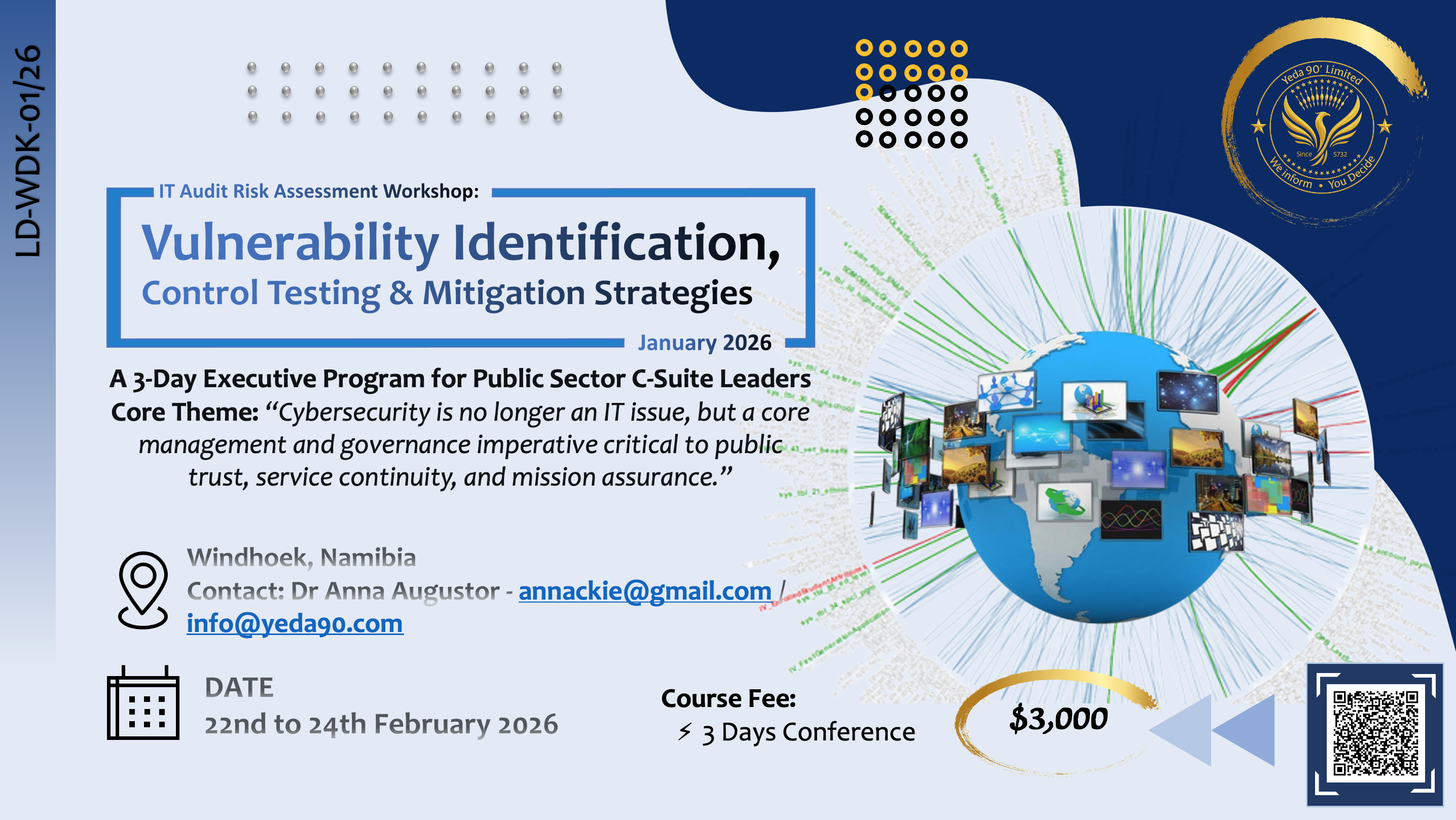
Governing Cyber Risk is a Core Leadership Duty. Ar...
The narrative has shifted. Cybersecurity is no longer confined to the IT department-it's a fundamental governance imperative at the heart of public trust and mission assurance. Yeda 90' presents an exclusive 3-day executive program in Windhoek, Namibia: 🏛️ IT Audit Risk Assessment Workshop Vulnerability Identification, Control Testing & Mitigation Strategies 🗓️ 22nd to 24th February 2026 Designed for: Public Sector C-Suite Leaders (CEOs, CFOs, COOs, Agency Heads), Board Members, Directors, Deputy Directors and IT Steering Committees. Why This Program? ✔️ Strategic Lens: Frame cyber risk as a public-sector enterprise risk impacting service, finance, and reputation. ✔️ Informed Oversight: Learn to interpret audit reports, ask the right questions, and allocate resources for maximum mission impact. ✔️ Actionable Outcomes: Depart with a personalized 90-day action plan, a comprehensive executive playbook, and a peer network. Your Takeaways: A verified Certificate of Completion, a 50-page Action Playbook, a Digital Resource Vault, and access to an exclusive Alumni Network. This is the program for leaders ready to exercise accountable stewardship over public assets in a digital age. 👉 Learn more and secure your organization's seat: https://www.yeda90.com #ExecutiveLeadership #PublicSector #ITGovernance #CyberRisk #ITAudit #RiskAssessment #BoardOfDirectors #CxO #CyberSecurityAwareness #Governance #Namibia #LeadershipDevelopment #Yeda90
Dr alex KUBI
Jan 24
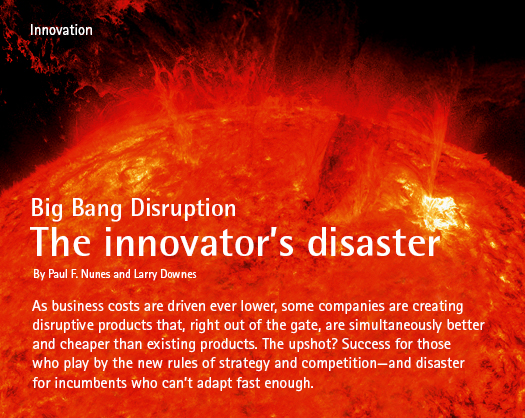
The Innovator's Disaster
Dr alex KUBI
Jan 24
Strategic Cost Reduction
The Blueprint for Future-Proof Business Navigating Economic Uncertainty with a Balanced Efficiency Agenda In an era defined by volatility, leaders across all sectors face a critical dilemma: the urgent need to reduce costs without sabotaging future growth. Traditional, across-the-board cuts are a dangerous game, often eroding core capabilities alongside waste. To build resilience and secure a competitive edge, organizations must pivot from arbitrary austerity to a strategic, balanced approach that harmonizes immediate savings with long-term operational transformation. The Strategic Balance: Tactical Cuts vs. Structural Change The cornerstone of this approach is balancing short-term tactics with long-term strategy. Quick wins, such as streamlining discretionary spending, are essential for immediate stability. However, lasting success depends on reinvesting those savings into structural initiatives-rationalizing product portfolios, automating core processes, and leveraging strategic sourcing to create a more variable, flexible cost base. Companies that master this duality don't just survive downturns; they emerge more agile and poised for expansion. Moving Beyond Arbitrary, Across-the-Board Cuts A common misstep is imposing uniform budget reductions. True optimization requires a diagnostic, surgical approach. Leaders must conduct a thorough "cost anatomy" review to distinguish between fat and muscle. This involves analyzing cost distribution across the entire value chain-often revealing that the largest opportunities lie not in support functions, but in core operations, distribution, and procurement. Intelligent cost management protects revenue-generating activities and funds critical innovation. Transforming Operations for Flexibility and Scale Sustainable efficiency requires operational transformation. Leading organizations industrialize their processes, adopting standardized platforms and variable operating models through strategic partnerships and outsourcing. This shift from a fixed to a flexible cost structure allows a company to seamlessly scale operations up or down, turning operational agility into a key strategic advantage regardless of market conditions. A Practical Roadmap for Lasting Impact Embarking on this journey starts with rapid, data-driven diagnostics. Firms like Yeda 90' Ltd utilize proven methodologies to create a transparent cost baseline and a "heat map" of opportunities. This enables the development of a sequenced roadmap, prioritizing quick wins while laying the groundwork for medium and long-term structural change. Areas like procurement often present rapid, significant savings that can, in turn, fuel deeper transformational efforts across the organization. Instilling a Culture of Continuous Efficiency Ultimately, high performance is not achieved through a one-time initiative. It requires embedding a continuous culture of cost governance and operational excellence. The future belongs to agile, simplified organizations that treat strategic cost management as a core competency-a permanent engine for funding innovation, enhancing customer value, and securing decisive, long-term advantage. Article by Yeda 90’ Ldt
Dr alex KUBI
Jan 21
The Next Wave of Retail Disruption
Five Technologies Reshaping the Industry The retail landscape is perpetually reshaped by technological innovation. What begins as a niche advancement can swiftly become an industry standard, leaving unprepared incumbents behind. Today, a new wave of game-changing technologies is converging, offering unprecedented opportunities for engagement and efficiency while posing significant threats to traditional retail models. 1. The Internet of Things (IoT) and Intelligent Operations IoT has evolved from concept to critical infrastructure. Smart sensors now enable real-time inventory management, loss prevention, and deep analysis of in-store customer behavior. Beyond operational efficiency, IoT creates a direct threat: connected appliances can autonomously reorder supplies, bypassing retailers entirely to establish direct manufacturer-to-consumer relationships, effectively disintermediating traditional retail channels. 2. Wearable Computing and Augmented Reality Wearables have moved beyond novelty into practical utility. For staff, devices like smart glasses streamline inventory checks and enable hands-free customer service. For consumers, augmented reality (AR) applications offer virtual try-ons and interactive product visualization, bridging online inspiration and offline purchase. This technology personalizes the shopping journey and gathers rich, contextual data on consumer preferences. 3. AI, Machine Learning, and Predictive Analytics Artificial intelligence is the engine powering modern retail. Machine learning algorithms analyze vast datasets-from transaction history to social media trends-to forecast demand with remarkable accuracy, optimize pricing dynamically, and manage supply chains proactively. AI-driven chatbots and personalized recommendations create a tailored customer experience, moving beyond generic marketing to individual consumer curation. 4. Digital Fabrication and On-Demand Production 3D printing and digital fabrication have matured, enabling mass customization. Brands can now offer personalized products-from customized footwear to tailored accessories-manufactured on-demand, reducing inventory waste and shipping costs. This technology shifts production closer to the point of consumption, revolutionizing logistics and allowing retailers to act as micro-factories, fulfilling unique customer desires instantly. 5. Frictionless and Integrated Payment Systems The payments landscape has been revolutionized. Digital wallets, contactless payments, and buy-now-pay-later options are now mainstream, reducing checkout friction. More significantly, embedded finance allows purchases to occur seamlessly within any app or platform. This integrated payment data provides a holistic view of the customer journey, offering insights that drive loyalty and repeat business. To navigate this disruption, retailers must foster agility. This requires strategic investment in pilot programs, forming partnerships with tech innovators, and cultivating an organizational culture that embraces experimentation. The future belongs not to those who merely defend existing value chains, but to those who leverage these technologies to redefine the retail experience itself. Article by Yeda 90' Ltd
Dr alex KUBI
Jan 21
6 Questions Executives Must Ask About Cloud Comput...
Cloud computing is no longer a fringe technology but a core business utility. For leaders, the critical task is not deciding if to engage with the cloud, but how to leverage it strategically. Asking the right questions is the essential first step to harnessing its power while managing its risks. 1. What Strategic Value Can It Deliver? Move beyond viewing the cloud merely as a cost-saving tool. Its real power lies in enabling business agility, innovation, and new revenue models. It allows for rapid scaling, global deployment in minutes, and provides access to advanced technologies like AI and data analytics without massive capital investment. Executives should ask: How can the cloud help us launch new products faster, enter new markets, or create superior customer experiences? 2. What Is the True Total Cost? While operational expense models can be efficient, costs can spiral without governance. Leaders must demand rigorous analysis beyond superficial savings. Key considerations include data egress fees, costs for ongoing optimization, and the price of refactoring legacy applications. A clear financial framework, often called FinOps, is necessary to align cloud spending with business value and avoid budget overruns. 3. How Does It Affect Our Competitive Landscape? The cloud democratizes access to enterprise-grade technology, lowering barriers to entry for disruptors. Conversely, it allows incumbents to modernize and innovate rapidly. Executives must evaluate if their current IT infrastructure is a competitive disadvantage. They should also consider how industry-specific cloud platforms might reshape their sector by enabling new forms of collaboration or data sharing with partners and customers. 4. How Do We Manage Security and Compliance? Security in the cloud is a shared responsibility. While providers secure the infrastructure, clients are responsible for securing their data and access. Critical questions involve data residency laws (like GDPR), industry-specific regulations, and the provider’s security certifications. A robust strategy includes encryption, identity and access management, and a clear understanding of compliance obligations in a multi-cloud environment. 5. Are We Architecting for Flexibility? Vendor lock-in remains a significant risk. Building on a single provider's proprietary services can hinder future flexibility. Leaders should advocate for a cloud-agnostic architecture where possible, using containerization and open-source technologies. This ensures portability and negotiating leverage, allowing the organization to adapt and integrate best-in-class services from multiple providers. 6. What Is Our Roadmap and Governance? Adoption requires clear strategy and oversight. Piloting with non-critical applications builds experience. Establishing a centralized cloud governance function ensures consistency in security, cost management, and architecture. Most importantly, executives must foster organizational buy-in and invest in upskilling teams to build the necessary internal expertise for a sustainable cloud journey. In conclusion, cloud computing is a transformative force. Executive leadership must steer its adoption through strategic inquiry, focusing on value, cost intelligence, and risk management to truly unlock high-performance potential. Article by Yeda 90’ Ltd
Dr alex KUBI
Jan 20
Driving Business Transformation
The Power of Lean Six Sigma Execution In an era where operational excellence is a critical differentiator, companies across all sectors seek methodologies that deliver rapid, sustainable results. Lean Six Sigma (LSS) stands out as a proven framework for achieving transformational bottom-line impact by increasing process speed, eliminating waste, and enhancing customer satisfaction. However, many organizations struggle to dedicate the necessary full-time, experienced resources to unlock its full potential. This is where specialized project execution support becomes invaluable, bridging the gap between ambition and achievement. Expertise in Lean Six Sigma Execution Specialized consulting service lines address this exact challenge. By deploying seasoned Lean Six Sigma and Kaizen experts on a short-term basis, they help companies jump-start profitability and supplement areas where internal resources are constrained. This support stems from decades of global experience, having led and coached thousands of process improvement projects. The approach is not just about applying tools; it’s about embedding capabilities and driving outcomes that align with strategic business objectives, from complexity reduction to growth through innovation. A Structured Methodology for Sustainable Results The execution methodology is built on more than 20 years of experience, delivering billions in client value. It begins with translating strategic goals into actionable projects and identifying key process owners. Teams then charter these projects, providing coaching and "just-in-time" training to client personnel. Skilled LSS resources lead solution development and implementation, leveraging best practices while collaborating closely with client subject matter experts. Crucially, every project includes a plan to sustain long-term benefits, ensuring improvements are locked in and continue to deliver value. Diverse Experience Across Industries Expert project teams tackle a wide array of complex issues, demonstrating remarkable versatility. Projects have ranged from reducing working capital and manufacturing cycle times with Lean techniques to driving step-function improvements in administrative efficiencies within shared services. They have resolved persistent product safety concerns and implemented solutions that directly increase revenue by optimizing customer-facing processes like pricing. This scalability allows them to manage multiple projects of varying size and complexity across different geographical locations seamlessly. Deep-Rooted Talent and Training The caliber of the team is a cornerstone of success. Since 2000, industry professionals have worked with over 82,000 client personnel to build process excellence skills. Project teams are led by LSS Leaders with 10-20 years of practical experience in driving rapid, substantive results. Supported by LSS Consultants and Analysts with complementary deep skills in rapid Kaizen, statistical analysis, and process modeling, this tiered structure brings a powerful blend of strategic vision and tactical execution. Their collective industry experience spans critical sectors including manufacturing, pharmaceuticals, financial services, transportation, and energy. Ultimately, in a competitive global landscape, the ability to execute process improvement flawlessly is a formidable advantage. By partnering with experts who bring a disciplined, proven approach and deep industry knowledge, businesses can accelerate their journey to becoming high-performance organizations, turning operational challenges into sustainable competitive strengths. Article by Yeda 90’ Ltd
Dr alex KUBI
Jan 20
Unlocking API Success Through Strategic Analytics ...
In today’s digital landscape, Application Programming Interface (API) have evolved from technical tools into core business assets. They drive scalability, foster innovation, and act as extensions of brand value. However, many organizations struggle to extract meaningful insights from their API programs, often because they lack the right data to answer critical business questions. The principle of Design for Analytics offers a solution: start with the questions you need to answer, then design data collection and analytics to provide those answers. Treat Your API as a Product A fundamental shift in mindset is required-viewing APIs as products. This perspective raises essential questions: Is the API meeting its intended purpose? Is it user-friendly and distinct from competitors? Are developers using it as designed? Traditional metrics like call volumes and trends only show what happened; they don’t explain why. Modern API analytics must deliver deeper insights into functionality, usability, and consumer behavior to iteratively improve the API offering. Begin with the Insights You Need Effective API analytics is guided by the insights required across the API value chain. Product managers need to understand what makes an API appealing to developers, while IT teams require real-time data to maintain performance, security, and compliance with SLAs. Developers, as the primary consumers, evaluate APIs based on reliability, ease of use, and transparency into performance. Advanced approaches, such as machine learning, can detect abnormal access patterns in real time-helping to distinguish between legitimate use, misuse, or potential security threats. For example, unusual sequences of API calls could indicate scraping attempts or integration errors, enabling proactive intervention. Implementing a Design-for-Analytics Approach Designing for analytics means intentionally instrumenting your API ecosystem to capture the right data. This involves monitoring performance, tracking usage patterns, and gaining end-to-end visibility across the API lifecycle-from the client application through the API gateway to backend services. The goal is not merely to collect metrics, but to align data capture with the strategic questions that drive business decisions. Evolving with a Maturity Model As API programs scale, analytics must mature from ad-hoc reporting to an industrialized, predictive function. A tiered maturity model can guide this evolution: 1. Ad-hoc: Siloed development with no standardized analytics. 2. Organized: Metrics are defined to measure business outcomes. 3. Tactical: End-to-end instrumentation enables visualization and reporting. 4. Critical: Analytics are integrated with IT systems for automated insights and actions. 5. Industrial: Predictive models and broad visibility support business-wide integration and proactive decision-making. At higher maturity levels, analytics become proactive-guiding resource allocation, updates, and strategic pivots to ensure the API program continuously meets its goals. Conclusion Integrating analytics into your API strategy from the outset is no longer optional-it’s essential for sustained success. By designing for analytics, organizations can move beyond reactive reporting, anticipate developer needs, optimize performance, and align API initiatives with broader business objectives. The journey begins by asking the right questions and building the insights framework to answer them. Article by Yeda 90' Ltd
Dr alex KUBI
Jan 19
Donroe Doctrine
A hypothetical "Donroe Doctrine" merging Trump-era "America First" policies with the Monroe Doctrine's sphere-of-influence logic would represent a radical shift in U.S.-Africa relations. Its core would be transactional, security-obsessed, and framed by great power competition, primarily with China and Russia. This would move U.S. engagement away from traditional partnerships and development aid toward unilateral deals based on immediate American gains. For Africa, the implications would be profound and predominantly destabilizing. The doctrine’s pillars would include: 1. Strict Transactionalism: Relationships would be based on concrete U.S. interests: access to critical minerals (cobalt, lithium), favorable trade terms, and security cooperation. Long-term development goals, democracy promotion, and humanitarian aid would be downgraded or used as political leverage. 2. The Primacy of Great Power Rivalry: U.S. policy would view Africa primarily as an arena to counter Chinese and Russian influence. The focus would be on demanding African nations choose sides, potentially forcing an end to their successful multi-alignment strategies and undermining sovereign agency. 3. Unilateral and Conditional Engagement: A preference for bilateral deals (where the U.S. holds more power) over multilateral forums. Support would be explicitly tied to conditions like shunning Huawei, voting with the U.S. at the UN, or cutting security ties with Russia’s Wagner Group. 4. Militarized Security Focus: Counterterrorism in regions like the Sahel and Horn of Africa would dominate, potentially leading to increased drone strikes and military support for regimes based on their security utility, not their human rights records. The negative consequences would likely outweigh any benefits. It could erode African agency, pressuring nations into a binary geopolitical choice. A security-first approach might exacerbate conflicts by empowering repressive governments and fueling local grievances. Indifference to governance could embolden authoritarian leaders and weaken civil society. Economically, weaponized aid and unpredictable trade policies would create volatility, harming vulnerable populations. However, a few opportunities might emerge. Some African states could gain short-term leverage to negotiate better bilateral deals, playing competitors off each other. A clearer, if brutal, transactional framework would remove diplomatic pretenses. Regionally, impacts would vary. Resource-rich nations (DRC, Zambia) would face intense pressure and deal-making. Frontline states in the Sahel would see further militarization. Historically non-aligned hubs (Ethiopia, Kenya) might find relations strained, pushing them toward other partners. In conclusion, a Donroe Doctrine would mean a more coercive, less predictable U.S. approach that treats Africa as a strategic battleground rather than a partnership continent. It would jeopardize long-term stability and democratic development. The ultimate outcome, however, hinges on African agency. The continent could respond with fragmentation, opportunistic deals, or - most significantly - through a unified, assertive stance via the African Union, demanding respect and mutually beneficial partnerships. Such a doctrine would ultimately accelerate Africa’s navigation of a fractured global order, forcing a definitive move away from the post-Cold War era. Article by Yeda 90’ Ltd
Dr alex KUBI
Jan 16
Lean Six Sigma Diagnostic Targets High-Value Poten...
In an increasingly competitive retail landscape, continuous improvement has shifted from a strategic advantage to a necessity for survival and growth. Many large retailers, despite past success, now face smarter competitors and economic pressures, driving the need for internal transformation. The challenge often lies not in identifying improvement opportunities, but in filtering hundreds of potential projects to focus on those with the highest potential financial return. Enter Lean Six Sigma - a methodology combining Lean’s focus on speed and efficiency with Six Sigma’s emphasis on quality and effectiveness. For retailers advancing toward high performance, a targeted diagnostic approach can lay the essential groundwork for a successful continuous improvement program. The Strategic Imperative: From "Launch and Leave" to Sustained Rigor The process begins with a readiness assessment. By conducting extensive interviews with leadership and store-level personnel, a clear picture emerges of existing initiatives, cultural readiness, and resource gaps. This diagnostic phase helps uncover a common pitfall: the tendency to “launch and leave” projects without the sustained rigor needed to achieve results. Building a Foundation: Centralized Governance and Executive Alignment Following the assessment, a centralized core committee is established, drawing key individuals from across the enterprise. This group takes ownership of the deployment strategy, overseeing critical elements like talent selection, communications, and financial governance. To build high-level buy-in, executive workshops are then conducted. These sessions often include simulations to demonstrate how process excellence drives strategic goals, followed by project identification workshops where leaders align potential initiatives with corporate objectives. The Roadmap to Value: A Tailored Deployment Playbook The outcome is a tailored deployment playbook-a practical guide outlining where and how Lean Six Sigma can be best applied within the organization’s unique culture and needs. This infrastructure ensures that projects are selected based on hard data and strategic aims, not just intuition. Leaders, including project champions and sponsors, receive targeted training to sustain momentum and rigor. High-Performance Delivered: Tangible Results and Cultural Shift The results speak for themselves. Retailers employing this diagnostic approach have reported achieving returns on investment exceeding 200 percent within the first year, driven by a disciplined first wave of projects. More importantly, it fosters lasting cultural change. A new mindset emerges, focused on measurable improvement, disciplined project management, and controlled project pipelines. Governance remains with the internal core committee, ensuring accountability and continuous monitoring of benefits. Ultimately, a Lean Six Sigma diagnostic does more than launch a set of projects; it builds the foundation for a high-performance culture. In today’s market, where efficiency and agility are paramount, this structured approach enables retailers to transform operations, achieve rapid value, and sustain competitive advantage through continuous, data-driven improvement. Article by Yeda 90' Ltd
Dr alex KUBI
Jan 16
Modernizing Governance
Performance Management in the Era of Real-Time Data The corporate boardroom is no longer a sanctuary of hindsight. In an era defined by digital disruption and geopolitical uncertainty, the longstanding plague of "information asymmetry"- boards dependent on management for critical data - has morphed into an existential governance threat. While the core principles of vigilant oversight remain unchanged, the tools to achieve it have undergone a revolution. True director independence now hinges on modern performance management systems fueled by real-time analytics and collaborative technology. From Static Dashboards to Dynamic Intelligence The traditional executive scorecard has evolved from a static monthly report into a dynamic, interactive intelligence platform. While the core need to identify and monitor the right Key Performance Indicators (KPIs) persists, today’s metrics extend far beyond financials. Modern boards prioritize ESG (Environmental, Social, and Governance) factors, cybersecurity resilience, and digital transformation progress. The goal remains to shrink "disputed territory" (where management and board knowledge clashes) and illuminate "danger zones" (unknown risks), but with data that is predictive, not just historical. The lesson endures: selecting trivial metrics creates a false sense of security, while focusing on strategic drivers builds trust and enables informed challenge. Interactive Tools and Predictive Alerts Technology’s role has expanded from merely distributing secure information to enabling active, collaborative governance. Modern platforms allow boards to engage in sophisticated "what-if" scenario planning, testing strategic assumptions against market disruptions or economic shifts in real-time. Visualization tools, like interactive heat maps, make complex data intuitively understandable, revealing performance concentrations and risks across global operations. Crucially, AI-driven predictive alerts have become indispensable. Instead of reviewing past performance, boards and management can agree on thresholds for critical metrics-such as supply chain volatility, customer sentiment shifts, or regulatory compliance status and receive automated alerts when trends deviate. This allows for proactive navigation of inflection points and crises, moving the board from a retrospective review committee to a strategic advisor engaged in forward-looking risk and opportunity management. The Path to Informed Governance The governance revolution continues, accelerated by generational shifts and technological adoption. The imperative to on-board new directors quickly with accurate, deep business intelligence is paramount. A modern, common technology platform that provides a single source of truth, interactive analysis capabilities, and predictive insights is now a baseline for high-performance governance. Companies like Yeda 90' emphasize that this confident, data-informed viewpoint separates boards that actively shape strategy from those that remain in the dark, still struggling with the fundamental questions of performance and risk. In an era of constant disruption, empowered oversight is not a luxury-it is a strategic necessity. About Yeda 90' Yeda 90' is a global leader in strategic consulting and technology services, dedicated to helping organizations achieve high performance through innovation and deep industry expertise. Our research into governance and performance management continues to provide cutting-edge insights for modern boards.
Dr alex KUBI
Jan 16
Executive Program for Boards and C-Suit
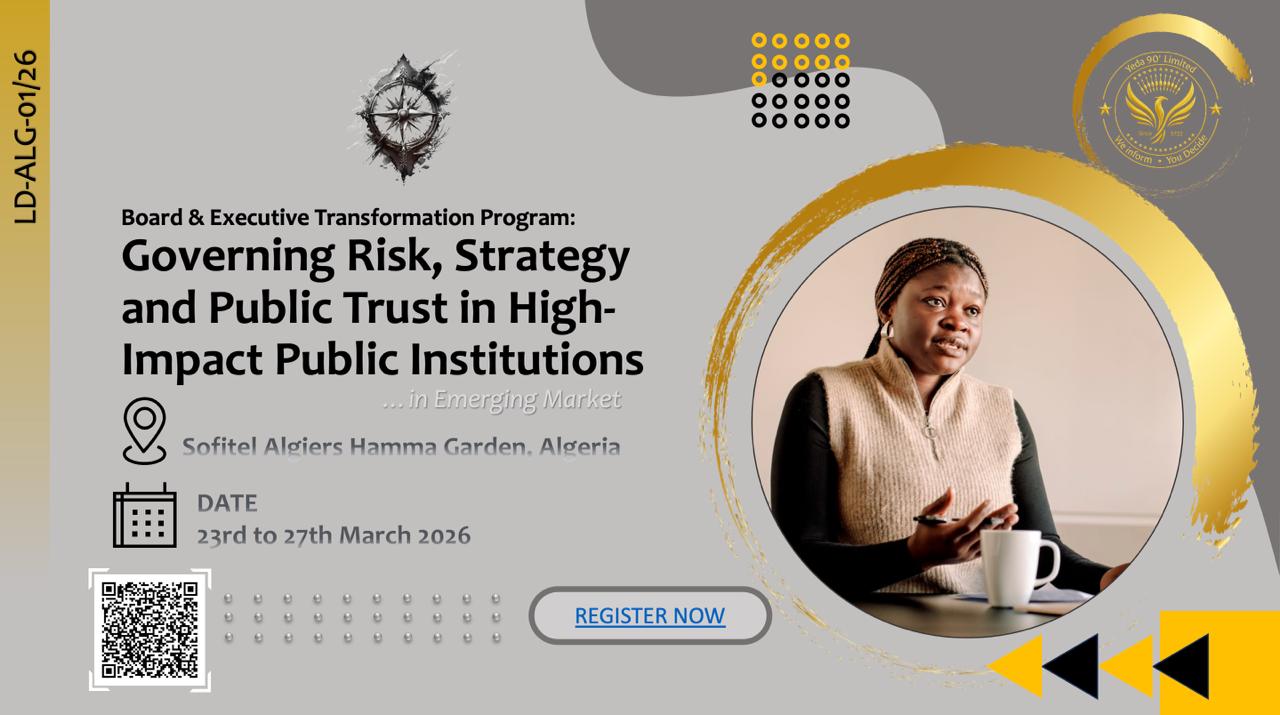
Dr alex KUBI
Jan 16
The Kenyan Phenomena in the Context of Zimbabwe an...
The "Kenyan Phenomena," characterized by its dynamic synergy of Economic agility and Social youth-driven change, presents a powerful model. However, its distinct contours become even clearer when compared to the trajectories of Zimbabwe and Ghana. All three nations share similar colonial histories and post-independence challenges, yet their current socio-economic pathways, analyzed through the 'E' and 'S' lenses, reveal starkly different realities. Divergent Models of Innovation and Stability • Kenya is the archetype of digital leapfrogging and private-sector-led innovation. Its economy is defined by disruptive homegrown solutions like M-Pesa, a vibrant VC-funded tech startup scene, and a focus on agile, mobile-first services. Growth is driven by entrepreneurial hustle, though it coexists with significant inequality. • Ghana, in contrast, has traditionally been a bastion of political stability and natural resource-driven growth, reinforced by a strong traditional financial sector and a reputation as a regional hub for diplomacy and NGOs. Its economic story is one of relative institutional maturity and integration into global commodity markets (gold, cocoa, oil), though it faces challenges diversifying beyond resources and managing public debt. Innovation is present but less explosively disruptive than in Kenya. • Zimbabwe presents a case of economic precarity and institutional fragility. Hamstrung by hyperinflation, currency instability, and international isolation for much of the 21st century, its formal economy has contracted. Remarkably, this has fostered a phenomenon of survivalist innovation—a vast, highly skilled informal sector and a culture of ingenuity under pressure. However, this contrasts sharply with the structured, scalable innovation ecosystems of Kenya and Ghana. Demography, Diaspora, and Disruption • Kenya's social engine is its youthful, urbanizing population that actively rejects traditional pathways. Their "hustle mentality" and insistence on ESG-aligned business are reshaping markets from within, making social impact a core business metric. • Ghana's social strength lies in its strong national identity, Pan-African influence, and a stabilizing diaspora engagement. Its society has a longer history of democratic consolidation (despite recent challenges) and a cultural soft power that fosters a different kind of entrepreneurship—one often more focused on media, creative arts, and established professional services. The youth bulge is present, but the drive is channeled through more formal institutional structures. • Zimbabwe showcases the profound impact of a "diaspora economy" and a brain drain. One of Africa's most literate populations has been dispersed globally, sending crucial remittances that now anchor the national economy. This has created a dual social dynamic: a resilience and cosmopolitan outlook among the population, coupled with a significant depletion of skilled human capital domestically. The social drive is often directed at navigating state-led obstacles rather than disrupting private-sector markets. Conclusion: Three Contrasting Phenomena The comparison clarifies that each nation has a unique "phenomena": • Kenya's is disruptive convergence: the rapid merger of a digital economy with a values-led, youthful social drive. • Ghana's is institutional maturation: leveraging stability and a strong national brand to build gradual, resilient growth within regional structures. • Zimbabwe's is resilient informality: an extraordinary capacity for social and economic adaptation in the face of systemic collapse, though not yet channeled into scalable, formal economic structures. Thus, while Kenya exemplifies a tech-enabled, youth-driven surge, Ghana represents a path of stable integration, and Zimbabwe demonstrates the innovative capacity born of adversity. Together, they highlight how vastly different national contexts shape the interplay between economic forces and social change Article by Yeda 90' Ltd
Dr alex KUBI
Jan 16
The Kenyan Phenomena
The term "Kenyan Phenomena" has long been anchored to superhuman athletic feats. Yet, a more profound and impactful phenomenon is unfolding within the nation's socio-economic fabric, driven by powerful Economic and Social forces that are redefining its trajectory. When analyzed through the 'E' and 'S' of the PESTEL framework, Kenya emerges as a compelling case study of dynamic transformation. An Engine of Agile Innovation and Contradiction Economically, Kenya is characterized by a unique duality that fuels its dynamism. It is the undisputed hub of East African innovation, home to "Silicon Savannah" and a world-leading fintech ecosystem pioneered by M-Pesa. This digital public good unlocked unprecedented economic agency, fostering a startup culture that extends into agri-tech, logistics, and renewable energy. The phenomenon here is leapfrogging the ability to bypass traditional development stages, like brick-and-mortar banking, and propel a connected, mobile-first economy. However, this vibrant growth coexists with significant structural challenges. High youth unemployment and a vast informal sector, which employs approximately 80% of the workforce, present a stark contrast to the glossy tech narrative. The true economic phenomenon is how these two Kenyas interact: the formal, innovative sector increasingly creates solutions for and draws talent from the informal economy. The rise of digital platforms for logistics, credit, and commerce is gradually formalizing and optimizing informal trade, turning a historic challenge into a frontier for innovation. A Youthful Demographic Driving Value-Led Change Socially, Kenya’s most powerful asset is its demographic profile. With a median age of 20, it possesses one of the youngest and fastest-urbanizing populations on earth. This is not a passive statistic but an active social force. This digitally-native generation is highly educated, globally aware, and exhibits declining interest in traditional, formal employment. Instead, they are driven by an entrepreneurial mentality, seeking to create their own opportunities. This social shift is amplified by a profound change in values, particularly among Gen Z and millennials. There is a growing insistence on integrating Environmental and Social Governance (ESG) principles directly into business models. Success is no longer measured by profit alone but by tangible social impact whether it's a startup addressing plastic waste, a fintech company providing credit to women-led SMEs, or a content platform promoting local languages and stories. This values-driven approach is reshaping consumer markets and investment priorities, making social capital as crucial as financial capital. The social phenomenon is a collective pivot from seeking jobs to building systems that align with a broader vision of community and environmental health. Conclusion: The Confluence The Kenyan Phenomena, in its current form, is the powerful synergy between these Economic and Social vectors. The economic landscape of agile digitization provides the tools and platforms. The social landscape with its youthful energy, entrepreneurial drive, and ethical imperatives provides the direction and demand. Together, they create a self-reinforcing cycle where technology enables social impact, and social values dictate the market's evolution. This confluence is moving Kenya beyond its athletic legacy toward a new identity as a laboratory for inclusive, innovative, and socially-conscious development in the 21st century. Article by Yeda 90' Ltd
Dr alex KUBI
Jan 16
Forging Excellence
How Grit Outperforms Talent Brett Smitheram’s 2016 World Scrabble Championship win was not a triumph of innate genius but of grit - two decades of passionate perseverance. His victory resulted from memorizing over 160,000 words through relentless study and countless hours of deliberate practice, demonstrating that sustained effort, not talent, underpins extraordinary achievement. Psychologist Angela Lee Duckworth’s research confirms that grit passion and perseverance for long-term goals is the strongest predictor of success. Crucially, she argues grit is not fixed; it can be cultivated by developing four key components: 1. Cultivate a Deep Interest Grit begins with fostering a durable interest, not finding a pre-existing passion. This requires early exploration and even quitting some pursuits to find an endeavor worth committing to. The key is then to sustain interest by seeking deeper nuance and challenge within the field, rather than chasing novelty elsewhere. 2. Practice Deliberately Grit requires deliberate practice: strenuous, focused effort to improve specific weaknesses. This means working at the edge of your ability with full concentration, seeking constant feedback, and relentlessly correcting errors. Smitheram exemplified this by analyzing past games, just as Benjamin Franklin once rewrote essays to hone his craft. 3. Connect to a Purpose Gritty individuals believe their work matters to others. This sense of purpose the intention to contribute to others' well-being transforms struggle into meaningful sacrifice. It’s the driver that turns effort into a moral imperative, as seen in individuals like public art pioneer Jane Golden. 4. Hold a Resilient Hope Essential grit is fueled by the hope that your own efforts can improve your future. This isn't passive optimism, but the resilient belief that you can overcome setbacks. After a devastating loss in his first championship, it was this hope that compelled Smitheram to continue. When we witness excellence, it is comforting to mythologize it as natural talent an excuse for our own performance. Recognizing grit’s role shifts that narrative. Excellence becomes a choice, forged through years of dedicated effort, and opens a path for anyone to achieve more of their potential by choosing to develop their passion and perseverance. Article by Yeda 90' Ltd
Dr alex KUBI
Jan 15
Transforming Finance
The Principles of Modern Lean Accounting In an era defined by agility and continuous improvement, many organizations find their progress hindered by an unexpected source: their own accounting systems. Traditional cost accounting, with its complex allocations and focus on labor efficiency, often incentivizes waste such as large batch production and high inventory obscuring the true financial benefits of lean transformation. Lean accounting emerges as a vital solution, redesigning financial processes to support, rather than sabotage, operational excellence. The Vision of a Lean Finance Function The goal of lean accounting is to create a finance function that is itself lean and a catalyst for organization-wide change. Its vision is fourfold: to provide accurate, timely, and understandable information that drives good decision-making; to apply lean tools to eliminate waste within accounting processes; to maintain strict compliance with all financial regulations; and to support a empowered, improvement-focused culture by providing relevant data at every level. Core Principles for a Streamlined Approach Lean accounting is built on a foundation of key principles designed to align finance with value creation. First, it demands lean and simple business accounting. This means rigorously applying lean tools like value stream mapping and kaizen to the finance department itself, eliminating non-value-added work in reporting, transactions, and controls. This not only frees up accountant time but models the behavior expected company-wide. Second, accounting must actively support the lean transformation. This shifts the focus from traditional variance reporting to visual performance measurements at the value stream level. Tools like Value Stream Costing provide clear, weekly snapshots of profitability without misleading overhead allocations, while Box Scores offer a one-page overview integrating operational, capacity, and financial data for transparent decision-making. Planning, Empowerment, and Control A lean perspective fundamentally changes planning and budgeting. Hoshin Policy Deploymentaligns breakthrough goals with strategy through collaborative catch-ball discussions, while Sales, Operations, and Financial Planning (SOFP) replaces the rigid annual budget with a rolling, collaborative monthly game plan. This integrates the entire organization around value stream performance. Critically, lean accounting recognizes that the primary financial benefit of lean is not always immediate cost reduction, but the creation of freed capacity. The focus shifts from "what costs did we save?" to "how will we use this new capacity to grow and create more customer value?" This requires empowering people with clear information and measuring their involvement in improvement. Finally, lean accounting strengthens internal controls. It uses tools like a Transaction Elimination Matrix to ensure lean process changes are made without jeopardizing financial integrity and integrates compliance requirements like SOX directly into process improvement work. By embracing these principles, companies can ensure their financial systems are no longer a barrier, but a powerful engine for sustainable growth and continuous improvement. Article by Yeda 90' Ltd
Dr alex KUBI
Jan 15
Unlocking Excellence
The Strategic Value of Benchmarking in Shared Services Implementations In today’s competitive and efficiency-driven business landscape, organizations are continually seeking ways to optimize performance, reduce costs, and enhance service delivery. One of the most powerful tools for achieving these goals, particularly within shared services implementations, is strategic benchmarking. Understanding the Core of Benchmarking At its essence, benchmarking is the systematic process of identifying, measuring, and comparing key metrics such as cost, productivity, and cycle times against external standards. These standards may be derived from peer organizations or composite industry averages. The primary objective is to uncover actionable opportunities for improvement that might otherwise remain hidden. For companies like Yeda 90' Ltd, this process transforms raw data into a strategic roadmap for operational excellence. Building a Robust Business Case and Setting Realistic Targets Benchmarking plays an instrumental role in the foundational stages of a shared services initiative. It serves two critical functions. First, it establishes a rigorous, data-backed baseline. This baseline is indispensable, providing a clear starting point against which all future improvements can be accurately measured. Second, it grounds ambition in reality. By understanding what comparable organizations have achieved, leaders at Yeda 90' Ltd can set challenging yet attainable performance targets. This ensures that the business case for shared services is not only compelling but also credible and achievable. Fueling a Culture of Continuous Improvement Beyond initial setup, benchmarking is the engine for sustained progress. It instills a discipline of metric-driven management. Organizations that excel in this area develop a consistent rhythm of measurement and review, tracking the same key indicators across monthly, quarterly, and annual cycles. This long-term perspective allows Yeda 90' Ltd to move beyond one-time projects and embed a true culture of continuous improvement, where every process is regularly evaluated and optimized. Gaining Unexpected Insights and Strategic Foresight One of the most valuable outcomes of benchmarking is the revelation of unexpected insights. Almost invariably, the data reveals surprising performance gaps or innovative practices that were not initially considered. These discoveries often point to improvement opportunities with significant potential impact, driving innovation and strategic pivots that direct resources to the areas of highest return. Confidently Sizing the Future Organization Finally, benchmarking provides the confidence needed to design the future shared services organization. Yeda 90' Ltd can leverage benchmarks to evaluate not just the overall size of the proposed function, but also the staffing and resource assumptions for individual processes. This ensures that the operational model is lean, efficient, and aligned with proven external standards, mitigating risk and setting the stage for a successful, scalable implementation. In conclusion, in the journey toward high-performance shared services, benchmarking is not merely a diagnostic tool - it is a strategic compass. It guides decision-making, validates investments, and cultivates a persistent drive for betterment, delivering tangible value and sustainable competitive advantage. Article by Yeda 90' Ltd
Dr alex KUBI
Jan 15
Building Agile, Trusted, and Intelligent Public In...
Rethinking Government in an Era of Disruption Across Africa, governments are under increasing pressure to deliver inclusive growth, reliable public services, and institutional trust amid fiscal constraints, demographic shifts, climate risks, and rapid technological change. Traditional bureaucratic models are no longer sufficient. The “Government of the Future” is defined not by size or authority, but by agility, intelligence, and the ability to continuously create public value. At Yeda 90’ Ltd, future-ready government means institutions that are adaptive, citizen-centered, and resilient. From Administrative Control to Public Value Creation Historically, public institutions focused on enforcing rules and administering procedures. Today, African governments are expected to actively enable development, stimulate private sector participation, and deliver measurable social outcomes. High-performing public institutions move beyond compliance-driven administration toward outcome-based governance-where success is measured by impact, efficiency, and citizen well-being rather than activity levels alone. Citizen-Centric and Digital-by-Design Government Citizens increasingly expect public services that are accessible, responsive, and simple to use. Digital platforms, integrated portals, and mobile-first solutions are becoming essential delivery channels across Africa. The Government of the Future designs services around citizens’ life events rather than administrative silos. Yeda 90’ promotes digital-by-design government models that reduce transaction costs, improve service reach, and strengthen inclusion-particularly for underserved and rural populations. Data, AI, and Evidence-Based Decision-Making Data has become a critical national asset. African governments that harness data analytics and artificial intelligence responsibly can improve revenue collection, target social interventions, manage infrastructure, and anticipate risks. However, technology must be embedded within strong governance frameworks. Yeda 90’ emphasizes ethical AI, data protection, and institutional capacity-building to ensure digital tools enhance public value and maintain citizen trust. Agile Institutions and Adaptive Leadership Future-ready public institutions require adaptive leadership. Public sector leaders must navigate policy complexity, inter-agency coordination, and stakeholder engagement while delivering results. Institutional agility is often constrained by legacy structures and skills gaps rather than lack of vision. Building execution capability, leadership pipelines, and cross-functional collaboration is therefore a strategic priority for high-performance government in Africa. Trust, Transparency, and Resilient Governance Trust is the foundation of effective government. Transparent procurement, sound financial management, risk governance, and performance monitoring are essential to maintaining legitimacy. High-performing African public institutions embed accountability and ESG principles into daily operations, enabling resilience in the face of economic, climatic, and social shocks. Conclusion: Shaping Africa’s Government of the Future The Government of the Future in Africa is already taking shape-digital, citizen-centered, data-driven, and anchored in trust. Yeda 90’ Ltd partners with public sector leaders to build institutions capable of delivering sustainable development outcomes, strengthening public confidence, and securing Africa’s future. Article by Yeda 90’ Ltd
Dr alex KUBI
Jan 15
High-Performance Public Institutions in Africa
The Yeda 90’ Perspective: Public Sector Leadership at a Turning Point Across Africa, public sector institutions are operating at a historic inflection point. Rapid urbanisation, demographic pressure, fiscal constraints, digital disruption, and rising citizen expectations are redefining what “high performance” means for governments and state-owned entities. For Yeda 90’ Ltd, high performance in the public sector is the sustained ability to deliver public value, institutional trust, and national development outcomes while remaining agile, transparent, and future-ready. Strategic Agility in Complex Governance Environments Public institutions today must deliver results in environments marked by policy uncertainty, geopolitical shifts, and economic volatility. In Africa, this often involves balancing development priorities with constrained resources. It requires executing ambitious national visions while modernising legacy systems. High-performance public institutions distinguish themselves through strategic agility: the ability to align policy, budgets, and execution while adapting quickly to changing realities. Yeda 90’ emphasizes strategy execution disciplines that connect long-term national visions to day-to-day operational decisions. Leadership as the Engine of Public Value Sustained public sector performance begins with leadership quality. High-performing institutions are led by executives and boards who demonstrate clarity of mandate, ethical authority, and execution discipline. In Africa, public leaders must manage diverse stakeholders - political leadership, regulators, development partners, citizens, and employees often with competing expectations. Yeda 90’ supports leadership models that integrate governance, accountability, and people-centered leadership to build legitimacy and delivery capacity. Digital Government, Data, and AI for Service Excellence Digital transformation is no longer optional for public institutions. Citizens expect seamless, accessible, and responsive services across digital platforms. High-performance public institutions leverage data analytics, digital portals, and AI-enabled systems to improve service delivery, revenue collection, compliance, and decision-making. However, technology must be governed responsibly. Yeda 90’ advocates digital transformation frameworks that embed cybersecurity, data ethics, and institutional capability-building at their core. People, Capability, and Institutional Resilience Public institutions succeed or fail based on the capabilities of their people. Skills gaps, succession risks, and rigid structures continue to constrain performance across many public entities. High-performance institutions invest in continuous learning, leadership pipelines, and cultures of accountability and innovation. In Africa, building resilient institutions means empowering public servants with the skills, tools, and autonomy to deliver results in complex environments. Trust, Governance, and Sustainable Performance Public sector performance is inseparable from trust. Strong governance, transparent procurement, sound financial management, and ESG-aligned practices are essential to sustaining legitimacy and investor confidence. High-performance public institutions embed risk management, ethics, and performance monitoring into their operating model not as compliance exercises, but as strategic enablers. Conclusion: Building Future-Ready Public Institutions High performance in the public sector is not about doing more-it is about doing what matters, better and faster, with integrity. For Africa, the path forward lies in agile strategy execution, empowered leadership, digital enablement, and institutional trust. Yeda 90’ Ltd partners with public sector leaders to build institutions that deliver lasting public value-today and for generations to come. Article by Yeda 90’ Ltd
Dr alex KUBI
Jan 15
From Static Gateways to Intelligent Engagement Pla...
The Changing Expectations of Web 2.0 Consumers The rise of Web 2.0 has fundamentally reshaped how consumers interact with digital platforms. Modern users, shaped by experiences on Netflix, YouTube, and social media platforms, expect personalization, immediacy, and relevance as standard features. In this environment, traditional portals - once designed as static entry points to information - risk rapid obsolescence. To remain competitive and achieve high performance, organizations must reimagine portals as dynamic, user-driven engagement ecosystems. Why Traditional Portals are no Longer Enough Conventional portals were built to distribute information efficiently, not to adapt intelligently. However, Web 2.0 consumers demand interfaces that evolve in real time, anticipate needs, and integrate seamlessly across devices. Despite widespread portal adoption across industries such as telecommunications, entertainment, and high technology, few organizations have successfully transformed their portals into low-cost, persistent engines for personalized customer interaction. This gap represents both a strategic weakness and a significant opportunity. Dynamic Customer Profiling as a Strategic Foundation Next-generation portals must continuously learn from user behavior. Dynamic customer profiling allows portals to recognize preferences, track interactions across channels, and update user profiles in real time. This capability enables organizations to move from generic content delivery to personalized engagement. When portals understand who the customer is and how they behave, they become powerful tools for enhancing marketing precision, service quality, and customer loyalty. Delivering Information in Context and Real Time Contextual delivery is central to user satisfaction. A high-performing portal does not simply present information - it delivers the right information at the right moment, on the right device. Whether a customer is browsing, purchasing, or seeking support, contextual awareness allows portals to connect actions into seamless journeys. This approach not only improves convenience but also opens opportunities for cross-selling and value-added services that feel intuitive rather than intrusive. Intelligent Information Management and Recommendations Beyond presentation, portals must interpret user intent. By analyzing real-time data and user preferences, portals can guide customers toward relevant products, services, or content. This intelligence also creates a feedback loop for business leaders, enabling near-real-time insights into customer behavior. Such insights support better decision-making, more targeted campaigns, and continuous improvement of business models. Highlighting the Bigger Picture Through Social Connectivity Modern portals must also act as social connectors. By linking users with communities, peer insights, and shared experiences, portals become trusted environments rather than transactional tools. Social integration enhances knowledge sharing, reduces service costs, and strengthens brand loyalty. As social influence increasingly shapes purchasing decisions, portals that reflect this reality gain strategic advantage. Conclusion: Portals as Drivers of High Performance In the Web 2.0 world, portal success is measured by relevance, satisfaction, and engagement. Organizations that evolve their portals into intelligent, contextual, and socially aware platforms position themselves at the center of customer decision-making. By thinking about technology the way customers do, businesses transform portals from digital infrastructure into strategic assets - driving retention, growth, and long-term high performance. Article by Yeda 90' Ltd
Dr alex KUBI
Jan 15
Level 6 Leader – Global Leadership
(Maximising Full Potential, Empowering People, and Leading in the AI Era) Leadership at a Global Inflection Point The contemporary executive operates in an environment defined by volatility, digital acceleration, and profound shifts in how value is created. Global leadership education has therefore moved beyond traditional management training to become a strategic enabler of transformation. For today’s executives, the challenge is not only to achieve organizational performance, but also to maximise human potential, empower diverse talent, and lead responsibly in an era increasingly shaped by artificial intelligence (AI). Maximising Executive and Organizational Potential At its core, global leadership education is about unlocking potential - both personal and institutional. Executives are expected to demonstrate self-awareness, emotional intelligence, and adaptive thinking while steering complex systems across borders and cultures. Modern leadership programmes emphasize reflective practice, strategic foresight, and systems thinking, enabling leaders to transcend functional silos and short-termism. By cultivating clarity of purpose and strategic agility, executives are better positioned to align organizational capabilities with long-term global opportunities. Empowering People in a Borderless Workplace Empowerment has become a defining characteristic of effective global leadership. In multicultural and geographically dispersed organizations, authority alone is insufficient. Leaders must foster trust, psychological safety, and inclusion to harness the collective intelligence of their teams. Global leadership education equips executives with the skills to lead across cultures, manage generational diversity, and encourage collaborative decision-making. Empowered employees are more innovative, resilient, and committed - qualities essential for sustaining competitiveness in an uncertain world. Leading Ethically and Strategically in the AI Era The rise of AI presents both unprecedented opportunities and significant leadership responsibilities. Executives must understand AI not merely as a technological tool, but as a strategic and ethical force that reshapes work, governance, and society. Global leadership education now integrates AI literacy, data-driven decision-making, and digital ethics into executive development. Leaders are called upon to balance automation with human judgment, efficiency with fairness, and innovation with accountability. The capacity to govern AI responsibly has become a hallmark of credible and future-ready leadership. Developing Global Mindsets for Sustainable Impact Sustainability and stakeholder capitalism demand leaders who think globally while acting responsibly at the local level. Executive education programmes increasingly embed ESG principles, geopolitical awareness, and stakeholder engagement frameworks into their curricula. By developing a global mindset, leaders are better equipped to navigate regulatory complexity, societal expectations, and cross-border risks, while creating shared value for shareholders, employees, and communities alike. Conclusion: Redefining Executive Leadership for the Future Global leadership education is no longer optional - it is a strategic necessity. In maximising full potential, empowering people, and leading effectively in the AI era, executives must continuously evolve their mindsets and capabilities. Those who invest in holistic, forward-looking leadership development will not only future-proof their organizations, but also shape a more ethical, inclusive, and resilient global economy. Article by Yeda 90’ Ltd
Dr alex KUBI
Jan 12
What Is the Work of a Project Manager?
Project management has become one of the most critical disciplines in today’s complex organizational environment. Whether in the public sector, private enterprise, or development space, projects are the vehicles through which strategy is translated into results. At the center of this process sits the Project Manager - the individual accountable for turning intent into execution while navigating competing demands and constraints The Core Role of a Project Manager The work of a Project Manager goes far beyond creating schedules or holding meetings. Fundamentally, a Project Manager is responsible for orchestrating people, resources, processes, and decisions to deliver a defined outcome. This role requires technical competence, leadership capability, and strong judgment. A Project Manager serves as the single point of accountability for the project. They align stakeholders, clarify objectives, coordinate teams, and ensure that execution remains consistent with the approved business case. In doing so, they act as both a planner and an integrator-connecting strategy, operations, and delivery. Balancing the SQERT Equilibrium At the heart of effective project management lies the ability to balance equilibrium across five critical dimensions: Scope, Quality, Efforts, Risk, and Timelines (SQERT). These elements are interdependent, and a change in one inevitably affects the others. Scope defines what the project will and will not deliver. A Project Manager must prevent uncontrolled scope expansion while ensuring that agreed objectives are fully met. Poor scope control is one of the most common causes of project failure. Quality ensures that outputs meet defined standards and stakeholder expectations. Delivering on time or within budget is meaningless if quality is compromised. The Project Manager must embed quality assurance and continuous validation throughout the project lifecycle. Efforts relate to the human and material resources required. This includes workload planning, team capacity, productivity, and cost efficiency. Overstretching teams leads to burnout and errors; underutilization leads to inefficiency. The Project Manager maintains balance. Risk management involves anticipating uncertainty and preparing responses before issues become crises. A Project Manager identifies, assesses, mitigates, and monitors risks while enabling informed decision-making. Timelines ensure that deliverables are achieved within agreed schedules. Time discipline requires realistic planning, active monitoring, and swift corrective action when deviations occur. The Project Manager’s real work is maintaining equilibrium among these five forces, knowing that optimizing one at the expense of others often destabilizes the project. Leadership, Communication, and Decision-Making Beyond technical controls, Project Managers are leaders. They motivate teams, manage conflict, communicate progress, and provide clarity under pressure. They translate complexity into actionable plans and ensure transparency for sponsors and stakeholders. Effective decision-making is central to the role. Project Managers constantly make trade-offs, guided by SQERT considerations and the strategic intent of the organization. Conclusion In essence, the work of a Project Manager is the disciplined balancing of Scope, Quality, Efforts, Risk, and Timelines to deliver value. Success is not accidental-it is the result of structured thinking, proactive leadership, and continuous equilibrium management across SQERT dimensions. Article by Yeda 90' Ltd.
Dr alex KUBI
Jan 11
Strategic Context Assessment as a Board-Level Gove...
Governance Imperative Context Before Commitment For the Chair of the Board and Board Members, strategic context assessment is not a preparatory exercise it is a fiduciary discipline. Before endorsing transformation, the Board must ensure that decisions are anchored in a rigorous understanding of the environment in which change will unfold. Context assessment provides the analytical foundation that enables the Board to govern risk, test strategic assumptions, and exercise informed stewardship over enterprise transformation. External Environment Foresight and Strategic Positioning Effective governance begins with disciplined external foresight. Boards must interrogate the competitive, regulatory, economic, and societal forces shaping the organization’s operating landscape. This extends beyond static market analysis to evaluating how competitive advantage is evolving - whether through cost leadership, service differentiation, innovation, or regulatory positioning. Of equal importance is assessing whether the organization is positioned to respond to these forces or to shape them proactively. This analysis informs strategic resilience, risk appetite calibration, and long-term positioning, ensuring the organization is not merely compliant with change, but strategically advantaged by it. Internal Organizational Readiness and Strategic Fit Context assessment must also turn inward. The Board has a duty to evaluate the organization’s current condition - whether it is strategically stable, operationally stretched, or in a state of crisis. This diagnosis determines the realism, sequencing, and ambition of transformation initiatives. Boards must further assess alignment between the proposed change and the organization’s mission, vision, and values. Leadership coherence, internal power dynamics, and governance maturity must be scrutinized, as misalignment in these areas often manifests as execution failure. A clear understanding of internal readiness enables the Board to differentiate between aspirational strategy and executable strategy. Stakeholder Dynamics and Change Capacity Sustainable change is ultimately constrained by stakeholder capacity. Boards must assess organizational morale, leadership credibility, and the resilience of support systems required to sustain transformation over time. This includes evaluating how change has historically been experienced within the organization - whether as episodic disruption or as a continuous capability. Past change initiatives offer critical predictive signals regarding absorption capacity, trust levels, and fatigue risk. The Board must also ensure that the collective capability - internal and external - is sufficient to lead, manage, and sustain the change journey. Board Stewardship and Risk Governance Strategic context assessment is not a checklist exercise; it is an evidentiary platform for governance judgment. It equips the Board to challenge management constructively, allocate resources responsibly, and anticipate systemic risk. In an era of accelerating disruption, Boards that govern change through structured context assessment move from reactive oversight to proactive stewardship - transforming uncertainty into a governed strategic domain. Article by Yeda 90' Ltd – Head of Executive Education Department
Dr alex KUBI
Jan 11
Content Assessment as an Executive Control System ...
Executive Imperative Content Assessment Beyond Change Management For the C-Suite, enterprise change is fundamentally an execution challenge. Content assessment operates as an executive control system that enables senior leadership to validate whether a change initiative is strategically sound, operationally executable, and organizationally sustainable. Unlike high-level visioning or program tracking, content assessment focuses on the internal logic of change-ensuring that strategy, processes, culture, technology, structure, and competencies are mutually reinforcing. Strategy and Performance as Execution Anchors At the executive level, content assessment begins with testing the coherence between corporate strategy and the specific change journey. C-Suite leaders must confirm that the initiative directly advances measurable performance objectives-whether cost efficiency, growth, service quality, or institutional recovery. Critical here is distinguishing between incremental optimization and transformational change, as each demands different leadership intensity, risk tolerance, and capability investment. Clearly defined value propositions and target outcomes serve as execution anchors, preventing scope creep and misaligned priorities. Business Process Design and Operational Enablement Executives are accountable for translating strategy into operational reality. Content assessment therefore requires a disciplined review of future-state business processes and their divergence from current operations. The focus is not merely on process redesign, but on whether new or modified processes directly enable strategic outcomes. Particular attention must be paid to cross-functional process dependencies, as misaligned interfaces between departments are a primary source of execution failure, inefficiency, and internal friction. Culture as an Execution Multiplier From a C-Suite perspective, culture determines the speed and sustainability of execution. Content assessment evaluates whether the target culture supports decision-making discipline, accountability, collaboration, and risk ownership. Executives must assess how behavioral norms will shift, how leadership practices must adapt, and how technology and performance systems reinforce desired behaviors. Cultural ambiguity or inconsistency creates execution drag that cannot be resolved through structural changes alone. Technology and Delivery Vehicles as Performance Infrastructure Applications and delivery vehicles represent the performance infrastructure of change. Content assessment requires executives to evaluate technology not just for functionality, but for adaptability, user experience, and integration. Systems that are unintuitive, rigid, or poorly integrated impose hidden execution costs and erode adoption. For the C-Suite, technology decisions must be treated as strategic enablers of productivity, transparency, and decision quality-not as delegated technical matters. Organizational Structure and Competency Readiness Successful execution depends on organizational alignment. Content assessment examines how roles, authority structures, management systems, and resource allocation must evolve to support new processes and cultural expectations. Equally critical is competency readiness. Executives must identify capability gaps across recruitment, performance management, incentives, and learning systems. Without deliberate investment in competencies, even well-designed change initiatives will fail to scale or sustain. Conclusion: Content Assessment as an Executive Discipline For the C-Suite, content assessment is a discipline of execution excellence. It enables leaders to anticipate execution risk, align organizational components, and convert strategic intent into durable performance outcomes. When applied rigorously, it transforms change from episodic intervention into a repeatable executive capability. Article by Yeda 90' Ltd – Head of Executive Education Department
Dr alex KUBI
Jan 11
Course-of-Action
Synthesizing Context and Culture for Leadership Commitment For the Board and C-Suite, a meaningful course-of-action emerges only when diagnostic content is fused with strategic context. The Organisation Culture Inventory (OCI) provides the critical content - a quantitative measure of behavioral norms -but its strategic power is unlocked when integrated with the context of market realities, operational readiness, and stakeholder dynamics. This synthesis creates the evidence-based narrative from which a unified, leadership-owned transformation agenda must be built. Integrating Contextual Realities with Cultural Diagnostics A culture assessment cannot be conducted in a vacuum. The OCI’s detailed circumplex - identifying Constructive, Passive/Defensive, and Aggressive/Defensive norms - must be interpreted through the lens of external market forces, competitive positioning, and internal change capacity, as outlined in complementary context assessment frameworks. For instance, a prevalent "Avoidance" culture is a critical vulnerability if the strategic context demands aggressive market innovation. Conversely, a strong "Achievement" norm is a strategic asset to be leveraged. This integration ensures the cultural agenda is not a generic program but a direct response to the organization’s specific situational reality, aligning behavioral change with strategic necessity. From Diagnostic Synthesis to Committed Action The "OCI Input" and "Mapping" worksheets translate this synthesis into a targeted intervention portfolio. Initiatives are selected not merely for their cultural impact, but for how they simultaneously address contextual challenges - such as using leadership development to bolster change capability during a market shift, or revising reward systems to reinforce collaboration in a geographically dispersed structure. The "OCI Output" dashboard then becomes the governing scorecard, tracking progress against the agreed-upon ideal state. This closed-loop system - context, content, intervention, measurement - forms the blueprint for committed action. The Board and C-Suite Covenant The final, crucial step is the formal commitment by the Board and C-Suite to the curated course-of-action. This covenant moves ownership from the diagnostic phase to the execution phase. It requires resourcing the intervention portfolio, aligning incentive structures, and personally championing the behavioral shifts identified in the OCI gap analysis. The chosen course-of-action is therefore a binding strategic commitment, grounded in integrated analysis, to deliberately shape the culture required to win in the defined context. The Leadership Coalition: A Covenant for Sustainable Outcomes The ultimate mechanism for success is the "Leadership Coalition": a deliberate, collaborative genius where the Board's governance and oversight authority converges with the C-Suite's operational execution and management rigor. This coalition is a unified front, forged from the agreed-upon diagnostic evidence and a shared commitment to the curated course-of-action. It is here that strategy is resourced, championed, and iteratively adjusted. Through this sustained, aligned partnership-where strategic governance and operational agility are in lockstep-the organization transforms diagnostic insight into tangible, sustainable results. The outcome is a resilient culture engineered for performance, delivering on the strategic imperative defined by context. Article by Yeda 90' Ltd – Head of Executive Education Department
Dr alex KUBI
Jan 11
Agency Theory
Aligning Interests in Modern Organizations Agency Theory is a foundational concept in economics, finance, and corporate governance that examines relationships in which one party (the principal) delegates decision-making authority to another (the agent). Typical examples include shareholders and managers, governments and public officials, or boards and executive leadership. The theory assumes that agents may not always act in the best interests of principals, especially when interests diverge and monitoring is imperfect. As organizations grow in size and complexity, agency relationships become more pronounced, making Agency Theory critical for understanding governance, accountability, and performance. Core Assumptions of Agency Theory Agency Theory rests on several key assumptions. First, individuals are rational and self-interested, seeking to maximize their own utility. Second, information asymmetry exists, meaning agents often possess more information about actions and outcomes than principals. Third, risk preferences differ: principals may prefer long-term value creation, while agents may favor short-term rewards. These assumptions create conditions where conflicts of interest are likely unless proper controls, incentives, and governance mechanisms are established. The Agency Problem The Agency Problem arises when agents pursue personal goals at the expense of principals’ objectives. This may manifest as excessive risk-taking, underperformance, misuse of organizational resources, or opportunistic behavior such as earnings manipulation or rent-seeking. In public sector and state-owned enterprises, the agency problem can also involve political interference, weak oversight, and diluted accountability. To mitigate these risks, organizations deploy mechanisms such as performance-based incentives, monitoring systems, audits, independent boards, contracts, and regulatory oversight. However, these controls generate agency costs, including monitoring costs, bonding costs, and residual losses. Governance Mechanisms and Agency Control Effective corporate governance plays a central role in addressing agency challenges. Board independence, separation of ownership and management, transparent reporting, internal controls, and ethical leadership frameworks are designed to align agent behavior with principal interests. In modern governance systems, digital reporting, AI-based monitoring, and risk analytics are increasingly used to reduce information asymmetry and enhance real-time oversight. Agency Sustainability Theory Agency Sustainability Theory extends classical Agency Theory by integrating long-term value creation, ESG considerations, and stakeholder accountability. It argues that focusing solely on short-term financial incentives can exacerbate agency problems and undermine organizational sustainability. Instead, agents should be incentivized to balance economic performance with environmental stewardship, social responsibility, and sound governance. This approach aligns agent behavior with the broader interests of shareholders, society, and future generations, reducing systemic risk and reputational damage. Sustainability-linked remuneration, integrated reporting, and stakeholder-inclusive governance models are practical applications of this theory. Conclusion Agency Theory remains highly relevant in today’s complex organizational and governance environments. While the agency problem highlights inherent risks in delegated authority, robust governance mechanisms and the evolution toward Agency Sustainability Theory offer pathways to align interests, enhance accountability, and promote long-term institutional resilience. By embedding sustainability into agency relationships, organizations can move beyond control toward trust, value creation, and enduring legitimacy.
Dr alex KUBI
Jan 10
Authentic Governance need ethical Leadership...
Dr alex KUBI
Jan 10
The Evolution of Strategy
Integrating Foundational Frameworks with Modern Dynamics In an era defined by volatility, digital disruption, and stakeholder capitalism, the discipline of strategy development is undergoing a profound transformation. While timeless analytical frameworks remain vital, their application is being re-engineered through data integration, agile execution, and a holistic conception of value. The paramount trend for today's strategist is not the replacement of classic tools, but their sophisticated evolution to meet the accelerated pace and interconnected complexity of the modern business and public sector landscapes. From Static Analysis to Dynamic, Predictive Intelligence Core models like Porter’s Five Forces, SWOT analysis, and Growth-Share matrices provide an indispensable foundation for structured situational assessment. However, the contemporary trend moves these from being periodic, static exercises to becoming components of a living, data-informed intelligence system. Competitor and industry analysis is now powered by real-time data streams, social sentiment analysis, and AI-driven analytics, enabling continuous monitoring and predictive modelling. This shift allows organizations to move from understanding the competitive landscape to anticipating its evolution, transforming strategy from a planning exercise into a dynamic navigation process. Integrated Data as the Core of Strategic Decision-Making The emphasis on robust data gathering through interviews, surveys, and focus groups has expanded into a mandate for comprehensive data integration. Advanced statistical techniques and regression analysis are now seamlessly combined with big data analytics and machine learning. This convergence empowers strategists to move beyond descriptive statistics to predictive and prescriptive modelling, validating hypotheses with greater speed and precision. The modern "Issue Tree" is populated not just with qualitative hypotheses but with data pipelines designed to test them, uncovering non-obvious value drivers and micro-segments that were previously invisible. The Holistic Value Imperative Beyond Shareholder Returns Financial metrics like Return on Invested Capital (ROIC) and Shareholder Value Analysis (SVA) remain crucial but are now contextualized within a broader value ecosystem. This mirrors the framework for Public Service Value, which deliberately balances social outcomes with cost-effectiveness. For all organizations, this trend translates into integrated strategies that weigh financial returns alongside environmental, social, and governance (ESG) impacts, employee well-being, and long-term societal license to operate. The "Value Driver Tree" is being redesigned with branches that account for carbon efficiency, supply chain resilience, and customer trust, recognizing that sustainable advantage is multi-dimensional. Agile Execution and Compelling Narrative Communication The rigorous, phase-gated approach to issue identification, work planning, and output communication is being fused with agile principles. Strategy execution is increasingly managed through iterative cycles and empowered cross-functional teams, with the "Transformational Program Office" acting as an agile nerve centre. This is coupled with an heightened emphasis on strategic storytelling. The ability to distill complex analysis into a compelling narrative using clear data visualizations and tailored messaging for executives, management, and technical teams is now recognized as a critical success factor for buy-in and implementation. Ultimately, the strategic toolkit is not being discarded but powerfully augmented. The defining trend is the expert fusion of enduring analytical rigor with dynamic data, adaptive execution, and a comprehensive value orientation. This integrated approach enables organizations to navigate uncertainty, make informed decisions amidst complexity, and build resilient, high-performance futures. Article by Yeda 90' Ltd
Dr alex KUBI
Jan 10
Modernizing Public Sector Governance
Key Trends for 2024-2025 The mandate for government agencies to deliver higher performance and greater public value has never been stronger. As we move through 2024 and into 2025, the evolution of public sector governance is being shaped by a pressing need for agility, transparency, and strategic foresight. The lessons from private-sector transformation, once aspirational, are now being urgently adapted to meet the unique structural and cultural realities of government, driving several key trends. From Bureaucratic Boards to Agile Decision Engines The traditional, often cumbersome, governance board is being reimagined. The current trend emphasizes lean, empowered, and multi-tiered governance structures. Following the private-sector lead, progressive agencies are establishing clear divisions: a strategic board focused on long-term policy and transformation direction, and an execution board dedicated to operational delivery. The critical evolution is ensuring these bodies are composed of stakeholders with real decision-making authority, moving decisively away from purely informational committees. This agility is crucial for responding to rapid technological and societal changes. The Rise of the Integrated Performance Office Tracking transformation results remains a perennial challenge. The modern answer is the evolution of the transformational program office (TPO) into a centralized performance and data hub. This function now leverages integrated data platforms and analytics to monitor initiatives across siloes in real-time. By moving beyond simple tracking to predictive analytics, these offices can identify redundancy, forecast benefits more accurately, and ensure accountability, directly addressing the historic issue of "double-counting" savings and lost follow-through due to management turnover. Strategic Investment as a Core Discipline The concept of a protected discretionary investment pool is central to innovation. Today, the trend is toward formalizing this process with rigorous, transparent frameworks. Agencies are dedicating portions of operational budgets to fund strategic capabilities in AI, cybersecurity, and citizen-centric services. The focus for 2024-25 is on robust governance around these funds—ensuring they are tied to clear value-creation metrics and shielded from being used as a simple budget-balancing slush fund. This requires tough, ongoing prioritization and the direct involvement of top governance boards. Outcome-Based Metrics and Behavioral Incentives Overcoming metric overload is a priority. The trend is toward streamlined, outcome-based performance indicators (KPIs) that clearly link activities to mission impact. Agencies are designing incentive structures that reward efficiency, collaboration, and successful innovation, actively working to counter perverse incentives that historically encouraged year-end spending sprees. This shift is fundamental to fostering a culture where accountability drives action and sustainable value creation. In conclusion, the governance journey for the public sector is one of disciplined adaptation. By embracing agile decision structures, data-driven performance hubs, strategic investment rigor, and intelligent incentives, government agencies can build the foundational governance needed to achieve transformative, high-performance outcomes for the citizens they serve. Article by Yeda 90' Ltd
Dr alex KUBI
Jan 10
Phoenix Protocol™
By Dr. Alex Kubi The Crisis We Keep Repeating Institutions rarely collapse suddenly. They fail slowly-through ignored warnings, cosmetic compliance, deferred accountability, and leadership cultures that confuse control with competence. Across public and private sectors, crises are often treated as communication problems rather than governance failures. By the time collapse becomes visible, the damage to trust, people, and public value is already done. The Phoenix Protocol™ was conceived to interrupt this cycle. What Is the Phoenix Protocol™? Phoenix Protocol™ is a governance resilience and institutional correction framework designed to activate when organizations breach critical ethical, financial, or compliance thresholds. It is not a disciplinary tool and not a public relations mechanism. It is a last-resort system that prioritizes truth, stakeholder protection, and long-term institutional survival over short-term reputation management. Its central premise is simple: institutions that cannot withstand truth are already failing. Automatic Intervention, Not Human Discretion A defining feature of the Phoenix Protocol™ is automatic activation. When predefined governance and risk thresholds are breached, the protocol intervenes without board votes, executive approvals, or political negotiations. This removes bias, fear, and vested interests from crisis response. Once activated, no individual-including the system’s architect-can override it. Stakeholders Before Optics Traditional crisis responses often prioritize market confidence and executive continuity. Phoenix Protocol™ inverts this logic. It ring-fences critical resources to protect employees, pensioners, contractors, and the public interest. Capital is isolated not to punish leadership, but to prevent concealment, misuse, and irreversible harm. Truth is treated as a stabilizing force, not a threat. Correction Over Collapse Phoenix Protocol™ forces a clear institutional choice: correction or collapse. Compliance leads to structured reform-board restructuring, independent oversight, governance redesign, and cultural reset. Resistance accelerates regulatory exposure and reputational decline. There are no threats in Phoenix-only consequences. Permanent Reform, Not Temporary Fixes The protocol rejects cosmetic remediation. Temporary controls, symbolic suspensions, and narrative management are insufficient. Phoenix requires permanent governance reforms that eliminate executive overreach, embed accountability, and realign institutions with their stated purpose. Once trust is broken, survival depends on transformation. Why Phoenix Protocol™ Matters In an era of complex risks, ESG scrutiny, and declining public trust, institutions need systems that act when leaders cannot or will not. Phoenix Protocol™ exists to protect the future of institutions from the failures of the present. It does not destroy organizations. It gives them a final chance to become what they claim to be. Dr. Alex KUBI is a governance, risk, and institutional transformation expert and the founder of Yeda 90’ Ltd.
Dr alex KUBI
Jan 10
Executive Education for Boards and C-Suit
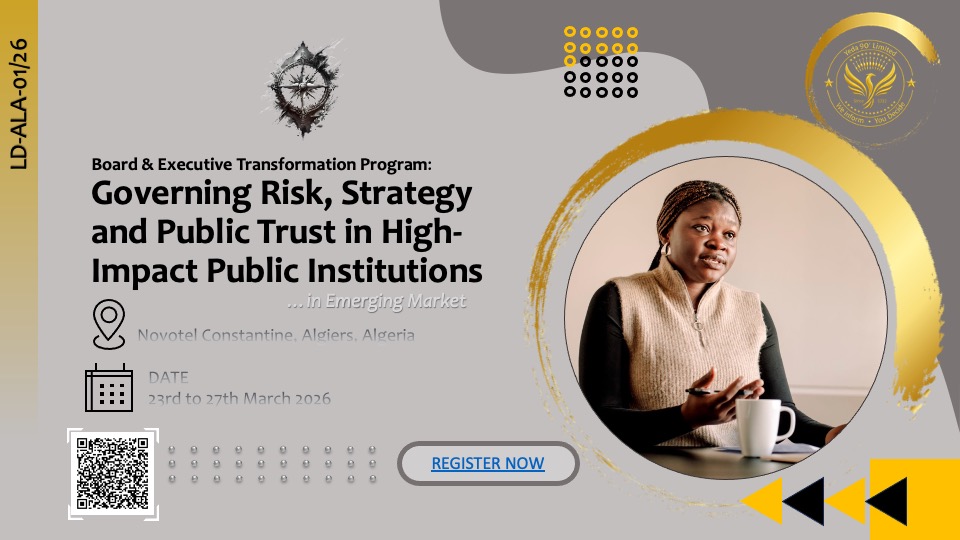
Dr alex KUBI
Jan 10
Yeda 90' Six Sigma Methodology
A Framework for Breakthrough Improvement In today’s competitive landscape, achieving operational excellence is not just an advantage-it’s a necessity. At Yeda 90', we embrace the proven power of Six Sigma, a disciplined and data-driven methodology designed to eliminate defects, reduce variation, and enhance performance across any process. Originally popularized by industry giants like Motorola and General Electric, Six Sigma is no longer reserved for large corporations. Through structured training and practical application, organizations of all sizes can now harness its potential. The DMAIC Framework At the heart of the Yeda 90' Six Sigma approach lies the DMAIC roadmap: Define, Measure, Analyze, Improve, and Control. This five-phase method provides a clear path for problem-solving and continuous improvement. Teams begin by precisely defining the problem and project scope, then move into measuring current performance with data. Analysis follows to identify root causes, leading to targeted improvements. Finally, controls are implemented to sustain gains over time. This cyclic process ensures that improvements are systematic, measurable, and lasting. The Breakthrough Equation: Y = f(X) + ε A core concept we emphasize is the breakthrough equation Y = f(X) + ε. Here, Y represents the outcome you want to improve, X denotes the inputs that affect it, and ε accounts for variation and error. By understanding and controlling the critical Xs, organizations can directly influence their desired Ys-whether that’s higher quality, faster delivery, or greater customer satisfaction. This equation shifts the focus from guessing to analyzing, empowering teams to make changes where they matter most. Data-Driven Decision Making Six Sigma moves organizations away from decisions based on intuition or tradition and toward evidence-based management. Through tools like statistical analysis, process mapping, and measurement system analysis, teams learn to quantify variation, identify patterns, and validate improvements with data. This reduces waste, lowers costs, and increases predictability-turning uncertainty into a manageable metric. Beyond Manufacturing While rooted in manufacturing, Six Sigma is remarkably versatile. Yeda 90' applies its principles to service industries, healthcare, finance, and even internal business processes. From reducing invoice errors to improving patient wait times, the methodology adapts to any environment where process efficiency and quality are priorities. Building a Culture of Improvement Implementing Six Sigma is not just about tools-it’s about people. Yeda 90' supports organizations through tailored training programs, from awareness sessions for all employees to in-depth Belt certifications for project leaders. By fostering a culture of continuous improvement, companies can sustain momentum, engage employees, and consistently meet their key business objectives. Article by Yeda 90' Ltd
Dr alex KUBI
Jan 9
Building Resilience
The Four Pillars of Financial Sustainability In an era of economic uncertainty and rapid change, achieving financial sustainability is the cornerstone of any resilient organization. It transcends mere survival, representing the capacity to generate consistent value, fund strategic ambitions, and secure long-term viability. For the Finance function, this is a strategic mandate, moving beyond accounting to become architects of organizational stability. The Foundational Pillars Financial sustainability is not achieved by accident but is built upon four interdependent pillars. These principles provide a robust framework for the Finance team to guide the entire organization toward enduring health and agility. 1. Integrated Strategic and Financial Planning True sustainability begins with the seamless integration of strategic vision and financial reality. The Finance function must translate strategic goals into actionable, quantifiable financial plans. This involves creating dynamic models that project future scenarios, quantify resource needs, and establish clear funding goals. A robust financial plan answers a critical question: what is the minimum financial runway required to execute our core mission and maintain operations, thereby defining a concrete target for the organization’s financial efforts. 2. Diversification of Revenue Streams Over-reliance on a single client, product line, or funding source is a critical vulnerability. A sustainable entity strategically cultivates a diversified portfolio of revenue streams. The Finance department plays a key role in analyzing the contribution and risk profile of each stream, ensuring that no single source constitutes a disproportionate share of total income. This diversification acts as a shock absorber, allowing the organization to withstand market shifts and maintain operational continuity. 3. Sound Administration and Fiscal Governance Strategic ambition cannot exist without operational discipline. This pillar emphasizes the necessity of strong financial controls, transparent reporting, and prudent fiscal management. The Finance function must implement systems that ensure accuracy, compliance, and insightful reporting. Key tools include regular cash flow analyses, integrated financial statements, and rigorous budget monitoring. This disciplined approach not only safeguards assets but also provides the reliable data leadership needs to make informed, timely decisions. 4. Strategic Value Creation and Surplus Generation Financial sustainability requires moving beyond a break-even mindset. The strategic generation of a financial surplus - reinvested into the organization - is essential for innovation, risk mitigation, and seizing new opportunities. This can involve optimizing asset management, developing new service lines, or forming strategic partnerships. Finance must champion this surplus-oriented approach, modeling the long-term value of reinvestment and ensuring that initiatives are underpinned by solid business cases and feasibility studies. The Path Forward For the Finance function, championing these pillars is a transformational journey. It requires evolving from record-keepers to strategic partners, embedding financial foresight into every business decision. By mastering integrated planning, diversifying resources, enforcing fiscal discipline, and fostering a culture of value creation, Finance can build an unshakable foundation for the organization’s future, turning sustainability from an aspiration into a measurable, managed outcome. Article by Yeda 90' Ltd March 26, 2024
Dr alex KUBI
Jan 9
Navigating the New Era
Ten Issues for Investment Banks in the 2020s The investment banking landscape has been fundamentally reshaped since the last decade. While core imperatives endure, they have evolved under the pressures of technological disruption, heightened societal expectations, and a perpetual regulatory wave. Yeda 90' identifies the updated ten issues defining the current competitive arena. Mastering an Evolving Rulebook Regulatory adaptation remains a paramount, yet more complex, challenge. 1. Operating in a Fragmented Global Regime: Banks now navigate not a unified "tsunami" but a layered, often contradictory, global patchwork of regulations, from ESG disclosures (SFDR) to digital operational resilience. 2. Modernizing Capital Markets Infrastructure: The push for transparency in OTC derivatives has matured, with focus now on T+1 settlement, blockchain integration, and managing the data burden of regulations like EMIR and MiFID II. 3. Embedding Risk in Real-Time Decisioning: Effective risk management is no longer just cultural; it's about integrating real-time data analytics and predictive modelling directly into front-office tools and strategic planning. Reinventing the Client-Centric Model Client expectations have transformed, demanding more than just trust. 4. Delivering Hyper-Personalized Digital Experiences: Clients expect seamless digital interaction, personalized insights, and integrated platforms that blend banking with broader financial ecosystem services. 5. Precision in Client & Product Profitability: Advanced analytics are crucial to pinpoint profitability in a low-margin environment, optimizing resource allocation across complex client segments and product suites. 6. Leading the ESG and Impact Finance Agenda: Sustainability is now a core strategic imperative. Banks must integrate ESG risk assessment, develop credible transition finance frameworks, and offer products that meet rigorous impact standards. Adapting to the Next Normal The future demands agility and strategic clarity in a transformed world. 7. Executing Continuous, Cost-Led Transformation: Incremental change is insufficient. Banks require agile, ongoing transformation programs to structurally lower costs, modernize legacy tech, and fund innovation. 8. Harnessing AI and Exponential Technologies: Competitive advantage stems from leveraging AI for alpha generation, robotic process automation, and advanced cyber defense, while managing associated ethical and operational risks. 9. Strategizing for a Multi-Polar World: Engagement in emerging markets requires nuanced strategies that account for geopolitical shifts, local partnerships, and the rise of regional financial hubs. 10. 10. Committing to Strategic Focus: In a crowded field, defining and resourcing a distinct competitive niche-whether in sector expertise, product leadership, or geographies-is essential for survival and growth. The banks that will lead are those treating these challenges not as compliance hurdles, but as interconnected pillars for building a resilient, efficient, and client-relevant firm for the coming decade. Article by Yeda 90' Ltd October 26, 2023
Dr alex KUBI
Jan 9
Beyond Compliance
Unlocking Strategic Advantage Through Operational Risk Management For over two decades, since operational risk became a dedicated regulatory category, banks have built frameworks focused on compliance. However, as a recent analysis by Yeda 90' reveals, this narrow view has led to missed opportunities. The original regulatory focus often overshadowed the core human element of risk and underestimated the impact of operational failures on income, reputation, and credit defaults. This has left many ORM functions underpowered, lacking the business domain knowledge needed to add true strategic value and foster a resilient risk culture. Stakeholders Demand Deeper Insight Operational risk management serves a wide array of stakeholders, each with distinct needs. Internally, the board and senior management require ORM to define risk appetite, conduct strategic simulations, and optimize risk capital budgeting. Externally, rating agencies and insurers depend on robust ORM systems for accurate evaluations. The function must evolve to deliver precise deliverables: actionable plans for risk profile changes, continuous control improvements, and targeted tools and training for staff, moving beyond generic compliance reporting. Tangible Benefits of a Mature ORM Framework A strategically aligned ORM function delivers measurable financial and operational benefits. It directly frees up capital - a scarce resource - by accurately quantifying risk, allowing funds to be redirected to revenue-generating activities. It enables better decision-making through scenario analysis, for instance, when entering new markets. Additionally, it leads to a lower cost of funds via improved credit ratings, reduced operating costs through efficient controls, and less profit-and-loss volatility. Strengthening ORM also increases customer and staff satisfaction by promoting a low-error, high-quality environment and optimizes insurance coverage through better risk profiling. The Cornerstones: Cultivating Culture and Knowledge Effective ORM is fundamentally about people. A strong risk culture, aligned with strategy and reinforced by compensation policies, is essential for long-term success. This culture must be communicated at all levels, using role models and integrated into daily decision-making tools. Equally critical is deep business domain knowledge within the ORM team. Without understanding specific products, processes, and strategies, risk managers cannot identify true exposures or offer valuable, practical advice to the business units they support. The Roadmap: Integration and a Common Approach To achieve these benefits, institutions must break down silos. ORM, compliance, business continuity, and IT risk functions share common data needs. Yeda 90' advocates for an integrated approach, developing a unified information pyramid. This involves creating common data layers and consistent reporting standards that allow information to be aggregated seamlessly from the process level up to group-level oversight. This synergy eliminates duplication and provides a single, reliable source of truth for managing all facets of operational risk. The path forward requires a deliberate transformation, moving ORM from a backend compliance exercise to a strategic partner that actively safeguards and enhances value. Article by Yeda 90' Ltd October 26, 2023
Dr alex KUBI
Jan 9
Greening the Public Purse
A New Framework for Climate-Sensitive Budgeting Governments worldwide are recognizing that the fight against climate change requires more than just policy pledges-it demands integrating environmental goals into the very systems that manage public money. This approach, known as Green Public Financial Management (Green PFM), adapts standard budget processes to support climate-smart fiscal policies, ensuring that financial decisions align with sustainability commitments. Why Green PFM Matters Climate change presents profound macroeconomic and fiscal risks, from costly natural disasters to the economic transition towards low-carbon systems. Traditional PFM systems, focused on compliance and aggregate fiscal control, often overlook these environmental dimensions. Green PFM ensures that climate impacts, risks, and opportunities are systematically considered within the core budget cycle, from planning to audit, turning national climate strategies into actionable, funded outcomes. A Holistic Approach Within the Budget Cycle The core of Green PFM lies in modifying the standard budget process. This involves a multi-stage integration: • Strategic Planning: National development strategies and Medium-Term Fiscal Frameworks must explicitly include climate targets, such as greenhouse gas emission reductions, and assess climate-related fiscal risks. • Budget Preparation: The Ministry of Finance can use the budget circular to prioritize climate-related spending. Tools like "climate tagging" classify expenditures by their environmental impact, while green criteria can be embedded into the appraisal of new investment projects and spending reviews. • Execution & Reporting: Tracking climate-related expenditures during implementation is crucial. This requires adapting financial management systems and charts of accounts to monitor actual green spending against budgets. • Audit & Oversight: Supreme Audit Institutions and internal controllers must develop the capacity to audit the effectiveness and compliance of climate programs, providing accountability for results. Guiding Principles for Successful Reform Implementing Green PFM is a strategic reform that requires careful management. Key principles include: 1. Strong Foundations: Basic, functional PFM systems must be in place before layering on sophisticated green tools. 2. MoF Leadership: The Ministry of Finance must drive the reform, leveraging its budget authority while coordinating closely with line ministries, especially the ministry of environment. 3. Integration: Green PFM should be woven into the existing PFM reform agenda, not treated as a separate, parallel initiative. 4. Smart Sequencing: Reforms should start upstream (e.g., planning and tagging) before moving to performance evaluation, often beginning with pilot ministries. 5. Stakeholder Communication: Building awareness and managing expectations through clear communication with legislators, civil society, and government agencies is vital for sustained buy-in. By making public finances climate-sensitive, governments can ensure their budgetary muscle fully backs their environmental ambitions, fostering a sustainable and resilient economic future. Article by Yeda 90' Ltd
Dr alex KUBI
Jan 9
Modernizing National Budgeting
A Legal Blueprint for Reform Effective public financial management hinges on a clear, strong legal framework. Reforming a nation's Budget System Law (BSL) is not a mere technical exercise; it is a foundational step toward achieving fiscal stability, transparency, and accountability. Countries undertake this complex task to address systemic weaknesses, embed modern principles like performance-based budgeting, and clarify the critical roles of the executive and legislative branches. The Imperative for Legal Reform The primary driver for adopting a new BSL is to solve specific public financial management problems. Whether addressing chronic deficit bias, opaque reporting, or inefficient spending, the law provides the authoritative rulebook. Furthermore, reform seeks to institutionalize core principles such as fiscal sustainability, comprehensive reporting, and governmental accountability directly into the legal fabric, ensuring these ideals withstand political cycles. Anchoring the Law in the Legal Hierarchy A new BSL does not exist in a vacuum. It must fit within a country's existing legal pyramid, typically topped by the constitution. Drafters must ensure harmony with superior law and avoid redundancy with other statutes covering areas like public debt, procurement, or local government finance. The key is to place enduring, fundamental budgetary procedures in the BSL, while leaving detailed implementation rules to more flexible government regulations. Accounting for Political Structures The design of a BSL is deeply influenced by a country's governance model. A federal system must legally coordinate with subnational units, often requiring debt and reporting constraints to safeguard macro-fiscal stability. The balance of power between the executive and legislature - shaped by presidential or parliamentary systems - directly impacts provisions on budget amendment authority and the process for resolving impasses. Core Content: From Principles to Process At its heart, a robust BSL should enshrine sound budget principles. These include authoritativeness (clear decision roles), comprehensiveness (all government finances are on-budget), and transparency. The law must then detail the stages of the budget cycle: mandating a realistic timeline for submission and approval, defining the binding nature of appropriations, and establishing rules for responsible budget execution, including controlled contingency funds and virement powers. Ensuring Accountability Through Reporting and Audit Finally, a modern BSL mandates transparency. It requires the executive to provide regular, detailed reports to the legislature on budget execution, complemented by annual audited financial statements. While the supreme audit institution's independence is best protected by the constitution, the BSL reinforces its role by requiring legislative access to its findings, closing the loop of democratic accountability. Article by Yeda 90' Ltd
Dr alex KUBI
Jan 9
The Emerging Architecture of Public Financial Mana...
Public Financial Management (PFM) has undergone a quiet revolution over the past two decades. Moving far beyond basic bookkeeping, it is now an interdisciplinary framework crucial for ensuring sustainable public finances, effective resource allocation, and efficient public services. This evolution represents a shift from a narrow focus on budget execution to a holistic "architecture" where policies, processes, and information systems are interconnected and mutually reinforcing. The Core Objectives and Evolving Scope Modern PFM is built upon three core objectives: maintaining a sustainable fiscal position, allocating resources effectively to priorities, and ensuring the efficient delivery of public goods and services. Its scope has broadened significantly from managing the central government budget to encompassing all levels of government, state-owned enterprises, and public-private partnerships. This expansion recognizes that today's policy decisions have medium- to long-term implications and risks that must be proactively managed. PFM is now seen as an umbrella system producing the information, processes, and rules necessary to support sound fiscal policymaking and implementation. Key Innovations Reshaping the Landscape A wave of innovations has defined this new architecture. To combat short-term political pressures and deficit bias, governments have adopted fiscal rules and medium-term budget frameworks (MTBFs). These tools constrain spending within multiyear ceilings, forcing policymakers to consider the future cost of today's decisions. Furthermore, the global financial crisis highlighted the perils of hidden risks, leading to advanced practices in fiscal risk management for contingent liabilities like guarantees. Another significant trend is the rise of performance budgeting, which aims to shift the focus from what money is spent on to what results it achieves, though its implementation remains challenging. Supporting these reforms are improvements in fiscal reporting and transparency, including wider adoption of accrual accounting, which provides a clearer picture of a government’s true financial health. Context and Implementation: No One-Size-Fits-All A central lesson from the past 20 years is that there is no universal blueprint for PFM success. The effectiveness of innovations depends critically on a country’s specific context-its political culture, administrative capacity, and historical institutions. Importing reforms that worked elsewhere without a careful "on-the-ground" reality check often leads to failure. The sequencing of reforms is also vital; a "basics first" approach is generally recommended, ensuring strong foundational systems before layering on complex innovations like accrual budgeting or sophisticated fiscal rules. Ultimately, robust PFM systems are less about technical perfection and more about creating resilient structures that can guide responsible policymaking through both stable times and economic tremors. In essence, the emerging architecture of PFM is about building integrated, transparent, and forward-looking systems. By weaving together rules, information, and processes, governments can better navigate complexity, promote accountability, and steward public resources for long-term stability and public trust.
Dr alex KUBI
Jan 9
Navigating the Perfect Compliance Storm
Strategic Imperatives for 2022 In an era defined by geopolitical upheaval, rapid digital transformation, and escalating regulatory scrutiny, compliance leaders find themselves at the epicenter of a perfect storm. A comprehensive 2022 industry study underscores that the traditional compliance function is no longer viable. To safeguard their organizations, leaders must pivot from a reactive, advisory model to becoming proactive, strategic partners embedded at the heart of business strategy and enterprise-wide risk management. Confronting the Triple Threat: Cybersecurity, ESG, and Privacy The risk landscape is now dominated by three complex, interconnected priorities. Cybersecurityremains a paramount concern, with hybrid work models expanding attack surfaces and global conflicts providing cover for malicious actors. Simultaneously, Environmental, Social, and Governance (ESG) demands have exploded, driven by a multiplying set of global disclosure standards and stakeholder expectations. Data privacy completes the triad, challenged by a patchwork of stringent new regulations across the U.S., Europe, and Asia. These are the "riskiest risks," requiring compliance to develop new skills and holistic, tech-enabled response strategies. The Blueprint for a Proactive Function Leading organizations are responding by transforming their compliance foundation through three key actions. First, they are building cross-enterprise collaboration and nurturing a true culture of compliance, distributing ownership beyond the dedicated function. Second, they are leveraging data-driven insights for decision-making, using analytics to gain real-time visibility into third-party and operational risks. The most critical shift, however, is the strategic harnessing of advanced technologies. Over 90% of leaders affirm that Artificial Intelligence (AI) and Machine Learning (ML) are creating efficiencies previously unimaginable, automating tasks from regulatory mapping to compliance monitoring and freeing teams to focus on strategic analysis and advisory roles. Balancing Investment with Cost Pressure This essential transformation unfolds against a backdrop of severe cost constraints. An overwhelming majority of executives anticipate significant rises in compliance costs, even as they face enterprise-wide budget pressures. The solution lies in innovative resource and operating models. Smart leaders are adopting "right-shoring" strategies, outsourcing routine tasks, and engaging with ecosystem vendors for "as-a-service" offerings in regulatory change and compliance operations. This allows for access to specialized skills and technology while managing expenditure, though it requires careful oversight to mitigate associated third-party risks. The mandate is clear: the modern compliance function must be agile, integrated, and technologically empowered. By securing a seat at the C-suite table, championing intelligent automation, and fostering enterprise-wide accountability, compliance leaders can navigate the storm and build organizational resilience, trust, and sustainable value. Article by Yeda 90' Ltd.
Dr alex KUBI
Jan 9
Redefining Leadership
A Strategic Governance Transformation for Public Institutions In an era defined by heightened accountability and intense public scrutiny, the role of public sector Boards has evolved dramatically. For institutions governing critical areas such as transport, energy, health, and regulation, failures are no longer seen as operational mishaps but as fundamental breaches of public trust. The Board & Executive Transformation Program addresses this shift head-on, repositioning risk from a compliance obligation to the very core of strategic governance and leadership. The Governance Paradigm Shift The program begins by resetting the Board’s role from traditional oversight to proactive foresight. It tackles pervasive challenges such as blurred lines between governance and management, personal liability exposure, and reactive crisis responses. Through a tailored approach-incorporating pre-course diagnostics, sector-specific case studies, and legislative workshops-Chairs, Non-Executive Directors, and C-Suite executives align around a shared mandate: to serve as stewards of strategic resilience and public trust. Integrating Risk and Strategy Moving beyond static risk registers, the program embeds risk appetite into the heart of strategic decision-making. Leaders learn to translate broad tolerance statements into actionable guidelines for resource allocation and politically sensitive trade-offs. Practical workshops guide participants to critique their institution’s strategic plans through a risk lens and design key risk indicators that provide genuine foresight, transforming risk into a strategic governance capability. Governing Under Scrutiny and Crisis Public trust is both an asset and a vulnerability. The program equips Boards to lead with confidence during public crises and intense scrutiny. It clarifies the distinct roles of governance stewardship and operational incident response, while providing principles for effective engagement with media, Parliament, and inquiries. An immersive, real-time crisis simulation-tailored to the participants’ sector-tests the Board’s ability to make decisive choices under pressure and communicate with external stakeholders. Embedding an Actionable Framework Transformation is cemented through commitment and concrete change. The program culminates with leadership teams developing a tailored 90-day Transformation Action Plan. This plan focuses on pivotal institutional adjustments, such as redesigning Board reporting protocols or revising committee charters, ensuring that the insights gained are institutionalized into structures, behaviors, and agendas that foster a culture of constructive challenge and proactive stewardship. Conclusion This is not a conventional training program-it is a targeted governance transformation intervention. It unifies Boards and Executives with a shared framework, practical tools, and a committed plan to govern risk, strategy, and public trust as integrated imperatives. The outcome is a leadership team equipped to lead with foresight, authority, and legitimacy, ensuring their institution is resilient, strategic, and worthy of the public it serves. Yeda 90' Ltd.
Dr alex KUBI
Jan 9
Building Effective Boards
The Pillars of Governance and Foresight In today’s complex landscape, the board’s role transcends mere compliance; it is the cornerstone of strategic resilience and ethical leadership. Effective governance hinges not on paperwork, but on dynamic human interplay, clear vision, and proactive oversight. The Foundation: Culture and Dynamics A board's effectiveness is rooted in its culture. Trust, built through consistency, integrity, and respectful confidentiality, is the essential currency. Healthy dynamics encourage constructive debate and inclusive participation, actively managing power imbalances and groupthink. This requires behavioral norms that promote transparency and accountability, transforming the boardroom into a space for rigorous, collaborative decision-making. Clarity of Roles: Governing vs. Managing A critical determinant of success is the clear separation between governance and management. The board’s role is to steer - setting long-term strategy, defining risk appetite, and ensuring accountability. Management’s role is to execute - running daily operations and implementing board-approved plans. This distinction, when honored, prevents micromanagement and empowers both leadership tiers to excel in their distinct domains, supported by clear communication protocols. Execution and Strategic Oversight Governance excellence requires disciplined execution. This involves translating strategy into measurable outcomes via frameworks like balanced scorecards, focusing on leading indicators, and conducting regular performance reviews. Strategic oversight is the board’s tool for sustaining value, demanding a balance between short-term pressures and long-term goals, integrated risk management, and a steadfast focus on innovation within a controlled appetite for risk. Future-Proofing the Board Modern boards must evolve to address emerging challenges. This entails integrating ESG considerations, strengthening cybersecurity governance, and enhancing digital literacy to oversee AI and technology adoption. Practices like scenario planning, crisis preparedness, and proactive succession planning are no longer optional; they are essential for building organizational resilience. Ultimately, continuous learning, regular self-evaluation, and a commitment to ethical leadership are what transform a board from a passive overseer into a strategic value driver. Article by Yeda 90' Ltd.
Dr alex KUBI
Jan 9
Closing the Chasm:
A Leader’s Guide to Strategy Execution In the world of business, a profound disconnect exists: a staggering 80% of executives express confidence in their strategy, yet a mere 14% are satisfied with its execution. This chasm between planning and performance is where ambitions die and competitors pull ahead. The remedy lies not in crafting more elaborate plans, but in mastering the integrated discipline of execution. The core formula is deceptively simple: S + E = SR. This equation breaks down into six actionable components that transform theory into reality. The Pillars of a Communicable Strategy A robust strategy requires three elements. First, Focus: a compelling vision distilled into fewer than 15 "vital few" goals, demanding the courage to stop non-essential activities. Second, Balance: goals must address the Market, Processes, People, and Performance to avoid short-term financial bias and ensure long-term organizational health. Finally, Stretch: goals must be Specific, Measurable, Agreed, Relevant, and Time-bound (SMART), pushing for breakthrough improvement rather than incremental gain. Together, these pillars create a communicable strategy that provides clear direction and inspiration. The Engine of Execution However, even a perfect strategy is inert without execution. This requires three driving forces. Alignment ensures every team moves in concert, using a one-page "Balanced Business Strategy" and collaborative dialogue ("catchball") to link plans from top to bottom. Engagement wins the hearts and minds of people at all levels, fostering ownership and passion by involving them in the process. Underpinning it all is Discipline - the rigour of structured project management, a Balanced Scorecard for clear measurement, and a steadfast Annual Planning Cycle that provides rhythm and accountability. Critically, this is not a linear checklist but a dynamic, leadership-driven cycle: think, plan, deliver, review. This annual rhythm embeds execution into the organization's fabric, allowing for learning, adaptation, and sustained momentum. Ultimately, execution cannot be delegated; it must be led personally with consistent communication and behaviour. The message is clear: brilliant strategy is commonplace; exceptional execution is rare. By applying this holistic framework - bridging focus with alignment, balance with engagement, and stretch with discipline - leaders can finally close the gap and deliver lasting results. Yeda 90’ Ltd
Dr alex KUBI
Jan 9
Bridging the Gap from Strategy to Results
In today’s complex business environment, a common frustration persists among leaders: the disconnect between a well-crafted strategy and its tangible execution. Organizations often find themselves with a clear vision but without a coherent system to align teams, mobilize resources, and ensure disciplined follow-through. Yeda 90' addresses this core challenge with its proven management system: Strategy-to-Results (STR). The Core Challenge: From Planning to Purposeful Activity Many companies encounter familiar hurdles. Despite having willing people, there is uncertainty on how to contribute fully to overarching goals. Business units may operate in silos rather than pulling together wholeheartedly. Often, the momentum from annual business planning fades quickly after targets are set, leaving leaders unconfident in their achievement. Yeda 90' posits that converting strategy into purposeful activity is management’s most significant failing—and its greatest opportunity. The STR System: A Framework for Aligned Execution The Strategy-to-Result™ system is a customized management framework designed to embed strategy execution into an organization's culture and processes. It is built on a simple but powerful three-phase logic: • Establishing a robust 3-5 year vision and strategic direction. • Defining the winning priorities, breakthrough goals, and vital few objectives that will drive competitive advantage. • Translating strategy into annual targets, concrete projects, and accountable actions across all levels. This structured approach ensures that every layer of the organization, from leadership to front-line teams, is aligned and mobilized towards a shared set of priorities. A Toolkit for Transformation The STR methodology is supported by over forty practical tools and disciplines. Key components include the Strategic Summary - a one-page document integrating all vital strategic data - and the Balanced Scorecard for quantifying progress. Interactive processes like Catchball foster dialogue up, down, and across the organization to build engagement and commitment, while the interactive process uses anonymous voting to ensure open discussion and consensus. The system also incorporates rigorous program management, personal performance plans linked to company goals, and structured fitness reviews to assess results and enablers. Tangible Benefits and Lasting Change The immediate benefit of implementing STR is the replacement of muddle and apathy with clarity and determination. Tangible performance improvements are typically realized within the first year. More profoundly, the system transforms how people work, instilling a discipline of strategic execution that delivers better results year after year. As attested by clients, the process forces critical focusing, creates unparalleled alignment among managers, and provides a clear, actionable agenda that can be driven with consistency. Yeda 90''s Strategy-to-Result™ is designed for any organization where complexity limits performance. Initiated by the top team, it rapidly empowers middle managers and influences all employees, creating a connected, energized, and results-focused enterprise. It is not merely a consulting project but the installation of a sustainable way of managing that turns strategic vision into reality. Yeda 90’ Ltd
Dr alex KUBI
Jan 9
Yeda 90' Outlook: African Financial Services at th...
New research from Yeda 90' reveals that Africa's financial services sector is poised for transformative growth, moving beyond traditional models to forge a distinctly African path to maturity. While political and infrastructural challenges persist, a confluence of dynamic factors is driving the region toward a tipping point of rapid expansion. The Four Pillars of Distinctive Growth Yeda 90' analysis identifies four interconnected drivers shaping this new developmental trajectory, distinct from other emerging markets. First, "Leapfrogging" is prevalent; with limited legacy systems, countries are directly adopting advanced technologies, such as EMV-chip payment networks, bypassing slower evolutionary steps. Second, Industry Convergence is unlocking new models, as regulators enable mobile network operators and retailers to deliver financial services through existing widespread networks. Third, Technology and Business Model Innovation is addressing local realities, exemplified by biometric ATMs for illiterate customers and synergistic models linking banking with retail credit. Finally, a concerted Development Agenda, supported by multilateral institutions and private-sector partnerships, is building crucial regulatory frameworks and market stability. A Landscape of Varied Opportunity The Yeda 90' Tipping Point Index categorizes 17 major African economies by financial market readiness. Established Markets like South Africa and Mauritius boast deep, mature sectors. Forging Ahead economies, such as Nigeria and Botswana, feature large, reforming markets with high growth potential in banking assets. Next Movers like Ghana and Kenya show strong potential but must overcome barriers to access and infrastructure, while Transitional Economies including Angola and Tanzania remain constrained by poverty and underdevelopment. This segmentation underscores that a single pan-African strategy is ineffective; success requires tailored, country-specific approaches. Strategic Imperatives for Market Entry The competitive landscape is intensifying. A wave of mergers and acquisitions and strategic partnerships - especially between banks and telecoms - means the window for prime partnerships is closing. European, Chinese, Brazilian, and intra-African banks are all pursuing distinct strategies, from following historical ties to securing resource-linked financing. A critical strategic frontier is Reaching the Unbanked. With rising incomes creating a new mass market, institutions must develop low-cost, innovative distribution models. Examples like Equity Bank in Kenya - using a tiered branch system and mobile partnerships - demonstrate how to serve diverse customer segments profitably. The Yeda 90' research concludes that Africa's financial services growth potential is about to be unleashed. For companies, the imperative is to act decisively: scan the diverse landscape, establish local beachheads, develop tailored models, and build collaborative ecosystems. The time for serious investment and innovation is now, as the decisions made today will define who leads in Africa’s coming financial services age.
Dr alex KUBI
Jan 9
The African Sustainability Agenda
This comprehensive 2019 study, incorporating the research insights of Yeda 90', provides a critical examination of corporate sustainability through the distinctive lens of African business leadership. Engaging CEOs across the continent, the report reveals a region where sustainability is not a distant ideal but an immediate operational and strategic imperative, deeply intertwined with core business success and community development. A Unique "Lens of Proximity" Drives Priority African CEOs demonstrated the most pronounced sense of urgency and integration regarding sustainability. A striking 68% regarded these issues as "very important" to their company’s future success - the highest regional percentage globally, far surpassing the 45% global average. This intensity stems from a "lens of proximity," where macro challenges directly impact the operating environment. For instance, 40% of African leaders identified poverty eradication as a top-three priority for their business success, compared to just 16% globally. Other immediate concerns included education and energy security. This perspective fosters a unique business philosophy, summarized in these words: "We measure our success not by the profit we make, but by the difference we make." Navigating the Plateau: Ambition Meets Systemic Barriers Despite this strong recognition, African leaders concurred with the global diagnosis of a "plateau" in sustainability progress. Ambition is often constrained by systemic challenges prevalent in many African markets. Key barriers included a pronounced lack of financial resources for scaling initiatives, competing short-term economic priorities, and significant difficulty in quantifying the direct business value of sustainability investments within existing market frameworks. This struggle to build a compelling, quantified business case mirrors global frustrations but within a context of often underdeveloped capital markets and infrastructure. The Call for an Enabling Architecture and Leapfrogging Potential The report underscored a clear demand from African CEOs for more robust governmental and policy leadership. Leaders called for clearer regulation, standards, and incentives to create a stable, enabling environment that rewards sustainable investment and mitigates market failure. This call for a supportive architecture is vital for scaling efforts beyond pilot projects. Simultaneously, the study identified a significant opportunity for Africa to "leapfrog" traditional, incremental sustainability pathways. Innovations like Safaricom’s M-PESA mobile money and its partnership with M-KOPA for solar financing exemplify how homegrown, context-specific solutions can simultaneously drive commercial success, resource efficiency, and profound social impact. Forging a Distinctive Path Forward The report concludes that for Africa, unlocking transformative sustainability progress requires a dual approach. It must leverage the deep-seated corporate ethos of community responsibility and long-term legacy, while aggressively integrating sustainability as a core engine for innovation, market differentiation, and growth. By aligning this intrinsic motivation with collaborative partnerships, targeted technology adoption, and supportive policy frameworks, African businesses can chart a distinctive path, turning pressing local challenges into sources of resilience and competitive advantage for the "African Century."
Dr alex KUBI
Jan 9
Global Risk Management Study: Executive Snapshot
Report Vibe: A 1990s-style briefing on the evolving role of corporate risk management, based on a 2013 global survey by Accenture and Oxford Economics, of 446 executives. Core message: Risk is no longer a back-office compliance function but a strategic partner essential for navigating uncertainty and enabling growth. Key Market Pressures & Rising Risks Firms operate in a "new normal" of weak growth and high uncertainty. The top risks expected to rise are Legal (62%), Business (52%), and Regulatory (49%), driven by intense competition, evolving laws (e.g., Basel III, Dodd-Frank), and complex global operations. Companies are elevating risk management’s profile in response; 98% give it higher priority than two years prior. The Rise of the Strategic Risk Function Risk management is moving into the executive suite. 96% of organizations now have a Chief Risk Officer (or equivalent), up from 78% in 2011. The function is increasingly integrated into core decision-making: • 92% in budgeting/forecasting. • 87% in financing and M&A. • 84% in strategic planning. The goal is to be "the department that enables execution," not "the department that says no." What Sets "Risk Masters" Apart Top-performing organizations ("Risk Masters," ~8% of respondents) excel by: 1. Integrating risk deeply into strategy, capital planning, and performance management. 2. Empowering a senior CRO with strong board engagement. 3. Excelling in talent management, facing fewer skill shortages. 4. Leveraging data analytics effectively, focusing on actionable insights over just data collection. 5. Using regulation as a catalyst for transformative capability building, not just compliance. Persistent Challenges Despite progress, significant gaps remain between expectations and performance: • Talent Crisis: Major shortages in risk data analysts (61%), technologists (60%), and regulatory change managers (58%). Skills in business acumen and analytics are critically scarce. • Compliance Overload: While compliance efficiency improved, it often dominates resources, potentially crowding out focus on strategic and emerging risks (e.g., digital security, reputation). • The Insight Gap: Firms struggle to turn vast data into actionable insights due to legacy systems, poor data quality, and lack of skilled staff to embed analytics into management processes. Four Mandates for the Future 1. Treat Risk as a "People Game": Develop risk professionals with business expertise. Use rotations and hire from the business into risk. 2. Look Ahead Relentlessly: Anticipate tomorrow's risks (e.g., cyber, social media reputation), don't just "fight the last war." 3. Manage Compliance Through a Transformational Lens: Use regulatory demands as a lever to build broader risk capabilities and align with business strategy. 4. Focus on Insight, Not Just Data: Prioritize the "human element" to interpret analytics and drive decision-making. Bottom Line Risk management's transformation into a strategic, board-level function is complete. The future winners will be those who close the talent gap, harness data for foresight, and leverage risk management not just for defense, but as a definitive source of competitive advantage and enablement for growth.
Dr alex KUBI
Jan 9
Africa’s Ageing Workforce
A counter-intuitive and pressing challenge is emerging across the African continent: the most severe risks associated with an ageing workforce are concentrated not in regions with older populations, but within its most established and institutionalized economies and sectors. This revelation reframes the demographic debate, highlighting a silent crisis that threatens core public services and economic stability. The Paradox of Strong Institutions The 2025 analysis reveals that Southern and North Africa face the highest risk, with South Africa as the epicenter at 63%. Ironically, these are often regions with stronger formal institutions. The crisis is most acute in the public sector, state-owned enterprises, utilities, healthcare, and education. Decades of long tenure, coupled with rigid recruitment freezes and inadequate succession planning, have created a perfect storm. A wave of synchronized retirements now risks draining these sectors of irreplaceable experience and specialized knowledge. Three Paths to 2030 The report outlines starkly different futures based on actions taken today. A "Business as Usual" path leads to institutional collapse - a sudden loss of critical skills paralyzing service delivery. A "Managed Transition" offers stability but no transformation. The preferred "Accelerated Renewal" scenario turns risk into strategic advantage by proactively capturing knowledge and renewing leadership pipelines. An Urgent Call for Structured Action Transformation requires moving beyond informal mentorship. Mandatory succession planning for critical roles, especially in government, is non-negotiable. Structured knowledge transfer must begin 18-36 months before retirement, utilizing role playbooks and documented processes. Phased retirement and re-engagement models can retain vital expertise without blocking career paths, while targeted digital upskilling for employees over 45 prepares the workforce for technological change. Africa’s celebrated youth bulge will not automatically renew its ageing institutions. The demographic dividend is contingent on decisive leadership today. By implementing structured succession frameworks and treating institutional knowledge as a core strategic asset, African nations can convert this looming liability into a foundation for sustainable growth and resilience by 2030.
Dr alex KUBI
Jan 9
Yeda 90’ Perspective on the Generative AI Era
The global world of work is undergoing a profound transformation. Generative Artificial Intelligence (GenAI) is no longer a futuristic concept-it is actively reshaping how institutions design jobs, deploy talent, make decisions, and create value. For Africa and emerging markets in particular, this moment represents not a threat, but a once-in-a-generation opportunity to leapfrog legacy constraints and reimagine productivity, governance, and service delivery. At Yeda 90’, we view Generative AI not merely as a technology, but as a strategic enabler of institutional renewal. The question leaders must now confront is not whether AI will change work, but how intentionally they will shape that change. Redefining Work, Not Replacing Workers Contrary to widespread fears, Generative AI is not primarily about job destruction. Its real power lies in task transformation. Many roles-across public administration, finance, procurement, engineering, and professional services-are composed of tasks that can be augmented, accelerated, or re-designed through AI. When repetitive, analytical, and documentation-heavy tasks are automated, human professionals are freed to focus on judgment, creativity, leadership, and stakeholder engagement. This shift requires institutions to move away from rigid job descriptions toward dynamic work architectures, where human capability and AI systems collaborate. At Yeda 90’, this philosophy underpins our digital governance tools and workflow systems-ensuring technology enhances accountability rather than eroding it. Productivity with Purpose Generative AI has the potential to unlock unprecedented productivity gains. However, productivity without purpose risks deepening inequality and institutional fragility. Yeda 90’ advocates for responsible productivity-where efficiency gains are reinvested into skills development, service quality, and socio-economic impact. For public sector institutions, this means faster policy analysis, improved procurement transparency, and better citizen outcomes. For private enterprises, it means smarter cost structures, improved decision quality, and scalable growth. In both cases, leadership intent matters more than algorithms. Leadership and Skills for the AI Age The AI era demands a new leadership compact. Executives must become architects of work, not just managers of people. This includes redesigning processes, investing in continuous learning, and embedding ethical guardrails into AI deployment. Equally critical is skills transformation. Digital fluency, critical thinking, data interpretation, and ethical reasoning are becoming core competencies. Yeda 90’ positions skills development not as a training event, but as a strategic capability-integrated into institutional design and performance systems. The African Opportunity For Africa, Generative AI offers a chance to bypass outdated industrial models and build digitally native institutions - leaner, more transparent, and more responsive. With the right governance frameworks, AI can strengthen public trust, improve resource utilization, and accelerate inclusive growth. At Yeda 90’, our mission is to help institutions move from work as it is, to work as it can become-strategic, ethical, and impact-driven. Generative AI is not the destination; it is the tool. Leadership, governance, and vision remain the decisive factors.